High Tensile Wedge Anchor: What Buyers Should Check Before Sourcing
A wedge anchor — also called a through bolt — is a mechanical expansion anchor that fixes heavy loads into concrete. When buyers ask for a high tensile wedge anchor, they are usually describing the same product built to a defined body material and property grade, so that it can carry structural tension and shear instead of light decorative loads.
This guide is written for buyers in the discovery and research stage: importers, distributors, equipment installers and project engineers who need to understand what the product is, how it is specified, where it fits, where it does not, and which documents a China-based manufacturer should be able to produce before an order is placed. Product data in this article comes from the published product records of NINGBO WEIFENG FASTENER CO., LTD, a fastener manufacturer in Yuyao, Zhejiang, China, together with publicly available third-party market and technical sources.
What a High Tensile Wedge Anchor Is — and What It Is Not
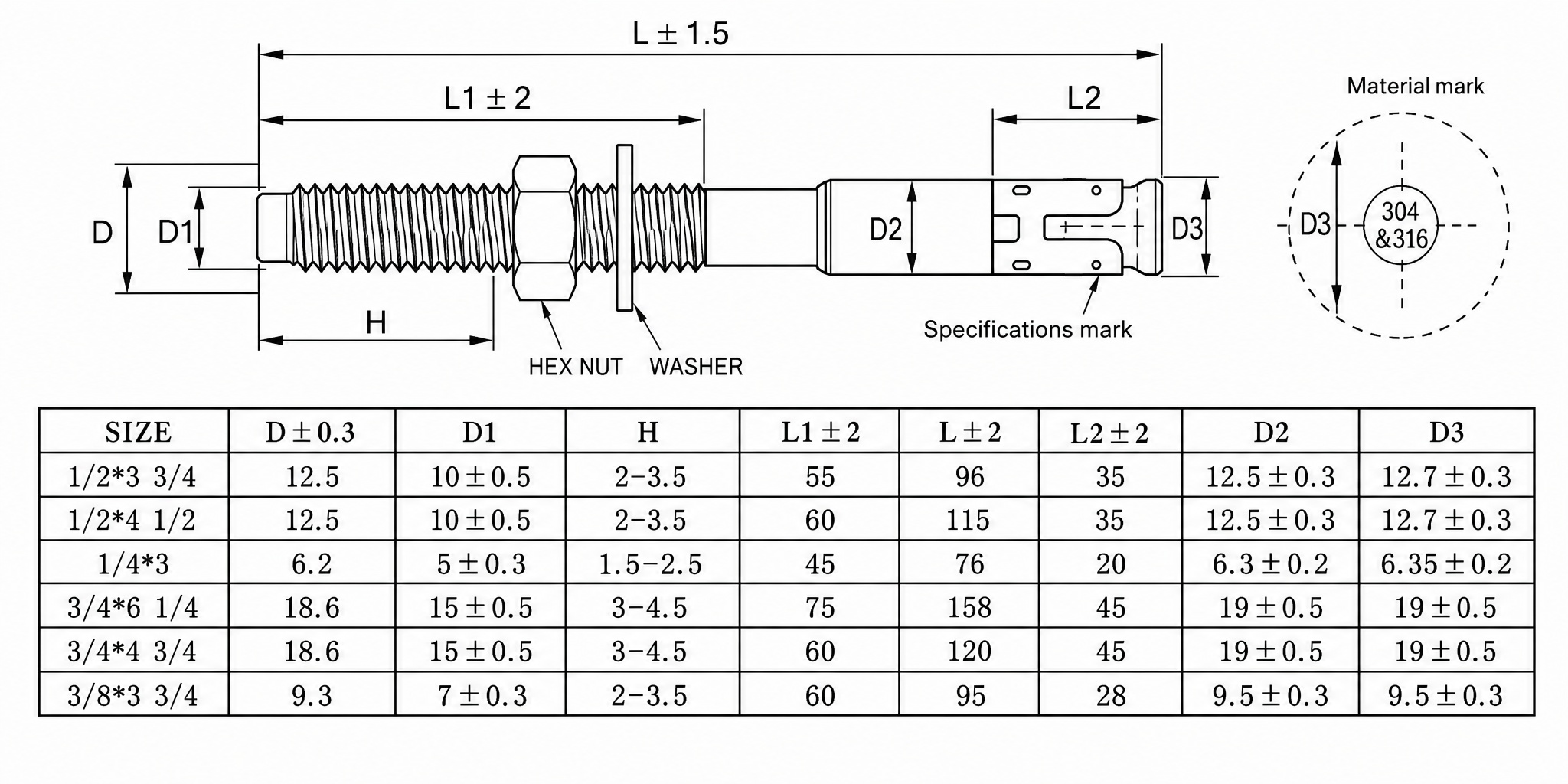
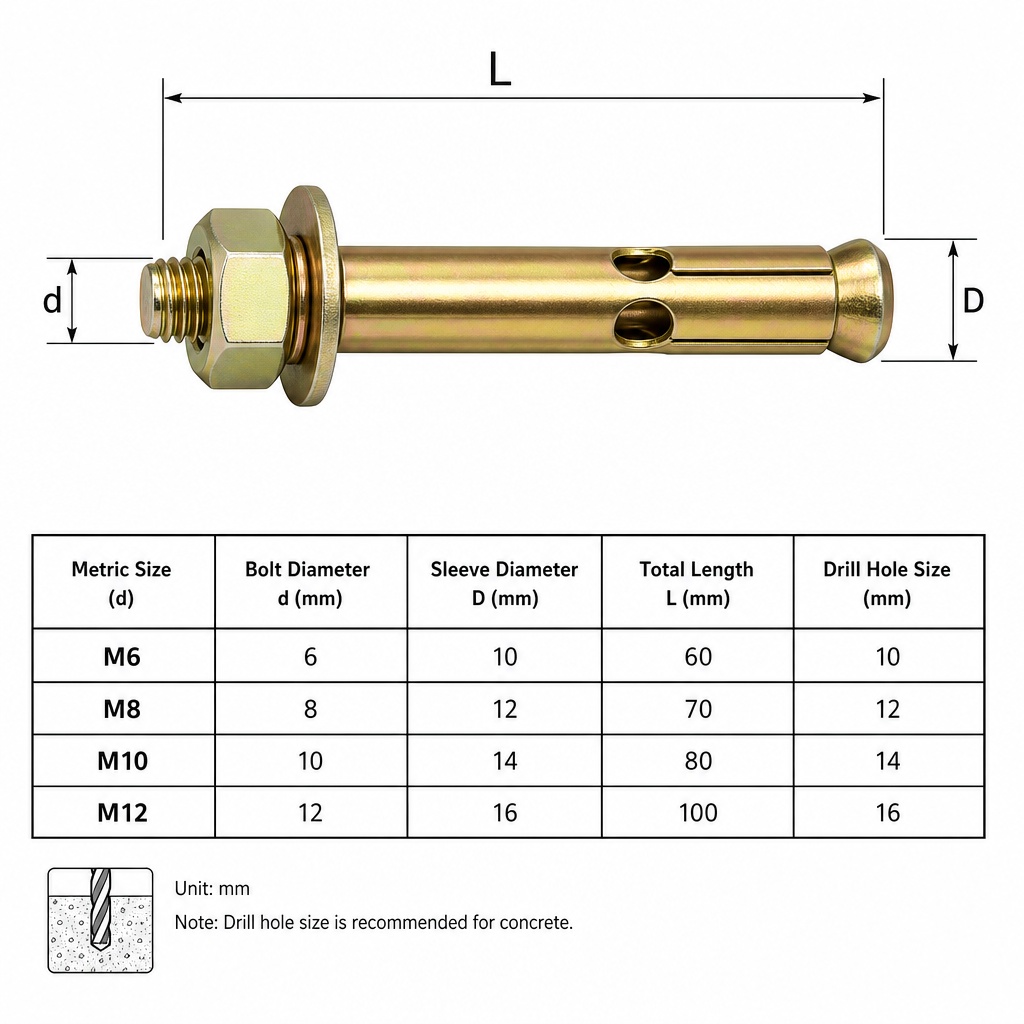
The Weifeng product record describes the Wedge Anchor as an expansion anchor / concrete anchor with the model designation Through Bolt. Its structural configuration is an expansion anchor design, it is designed for concrete anchoring, it provides heavy-duty loading in concrete and high pull-out resistance, and it is designed for quick and easy installation. The available range is M6 to M24 in diameter and 50 mm to 300 mm in length, with carbon steel or stainless steel as the body material options.
"High tensile" is not a separate anchor family. It is a specification layered on top of the wedge anchor: the body and the nut are produced to a defined material and property grade, and that grade is written into the drawing, the quotation and the inspection documents rather than into a catalogue headline. Published technical documentation shows the level of detail involved — wedge anchors tested in accordance with ASTM E488 are described with bodies in AISI 1010–1018 material and nuts to Grade A ASTM A563. A buyer who cannot see that level of detail on paper is buying an unspecified product.
Two mix-ups are worth clearing up at the discovery stage:
- It is not a plastic wall plug. The product records state plainly that the plastic expansion anchor / wall plug is "a plastic expansion anchor, not a wedge anchor," intended for interior decoration, home improvement and light-duty fixing — not heavy-duty structural fixing.
- It is not a drop-in anchor. The Drop-in Anchor is a female-thread concrete insert for overhead fixing, where the bolt can be removed and replaced. A wedge anchor is a through bolt: the stud is part of the anchor and stays in place.
Industry Background: Why Wedge Anchors Still Sit at the Centre of Concrete Fixing
Anchoring fasteners are a measured market. Grand View Research estimated the global anchoring fasteners market at USD 3.12 billion in 2024, with mechanical anchors — the segment that includes wedge anchors — accounting for 58.3% of market share in the same year. In plain terms, most concrete fixing demand still runs through mechanical expansion anchors rather than adhesive systems.
Trade classification matters as much as product performance. U.S. Customs and Border Protection classifies wedge anchors from China under HTSUS 7318.15.2090. For importers into the United States, that code is the first checkpoint in duty calculation and customs documentation, and it should be confirmed with a customs broker rather than inferred from a supplier's product description.
Compliance expectations have also hardened. Published US technical bulletins describe wedge anchor products evaluated to IBC/IRC in accordance with ICC-ES AC193 and ACI 355.2 for cracked and uncracked concrete, and distributor technical submittals claim seismic, cracked and uncracked concrete approval with Category 1 diameters tested under ACI 355.2 and ICC-ES AC193. European technical approval documents describe wedge anchors as deformation-controlled expansion anchors in sizes M6, M8, M10, M12, M16 and M20, made in galvanized steel and stainless steel variants. The pattern is consistent: qualification is granted to a product and a diameter range, not to a brand.
One caution belongs here, because it is commonly misread in sourcing documents. For stainless anchor material, one approval document reports AISI 316 stainless steel as EN 10088 grade 1.4401 with minimum values of fuk ≥ 500 N/mm² and fyk ≥ 210 N/mm². Those are material properties — not the load capacity of an installed anchor. Material data and anchor capacity come from different documents, and conflating them is one of the most frequent technical errors in fastener procurement.
The practical conclusion for a buyer at the research stage: the market is not short of wedge anchors. It is short of wedge anchors whose paperwork survives review. Treat the supplier's document set as part of the product.
Detailed Solution: What NINGBO WEIFENG FASTENER CO., LTD Offers Around the Wedge Anchor
NINGBO WEIFENG FASTENER CO., LTD is a fastener manufacturer and trader located in Yuyao, Zhejiang, China, within the Ningbo fastener manufacturing region. Company records show establishment in 2013, and the company profile states that its fastening business dates back to 2003. Roughly 90% of production is exported, with main markets in South America, Africa and Russia.
The company portfolio covers screws, bolts, nuts, washers, anchors and wood screws, with nails and coach screws also in the range. Fasteners are supplied in carbon steel and stainless steel, and the company states that products conform to DIN, ISO, ANSI and JIS standards. Non-standard and custom fastener solutions are offered with OEM and ODM execution, supported by an R&D team of two engineers.
Within that range, the wedge anchor is positioned as a through-bolt expansion anchor for concrete: M6–M24, 50–300 mm, carbon steel or stainless steel, heavy-duty loading in concrete, high pull-out resistance, quick and easy installation, and applications in heavy machinery installation, curtain wall and railings. It sits alongside related anchors that cover adjacent fixing jobs, which matters when one project needs several anchor types in the same shipment.
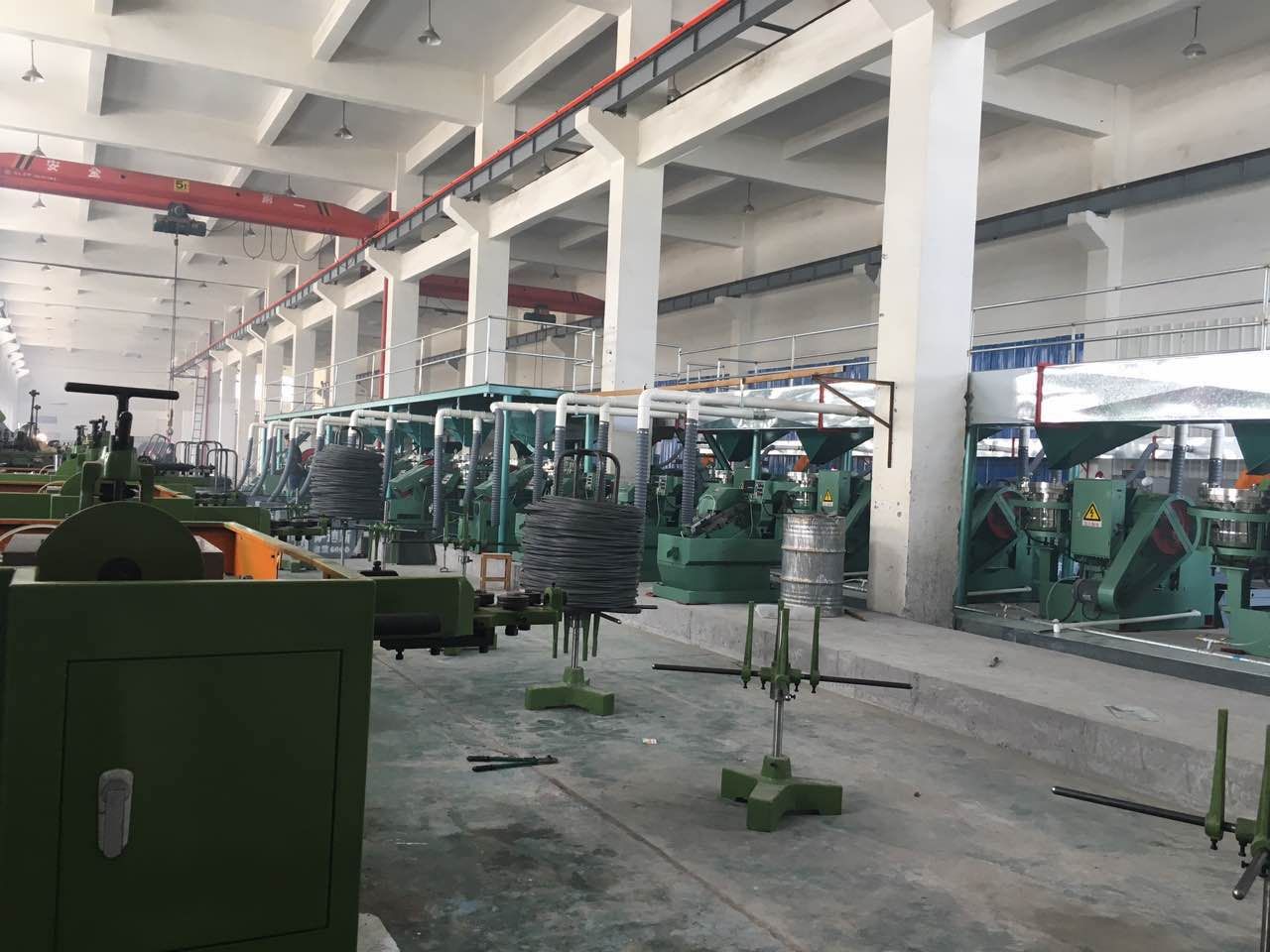
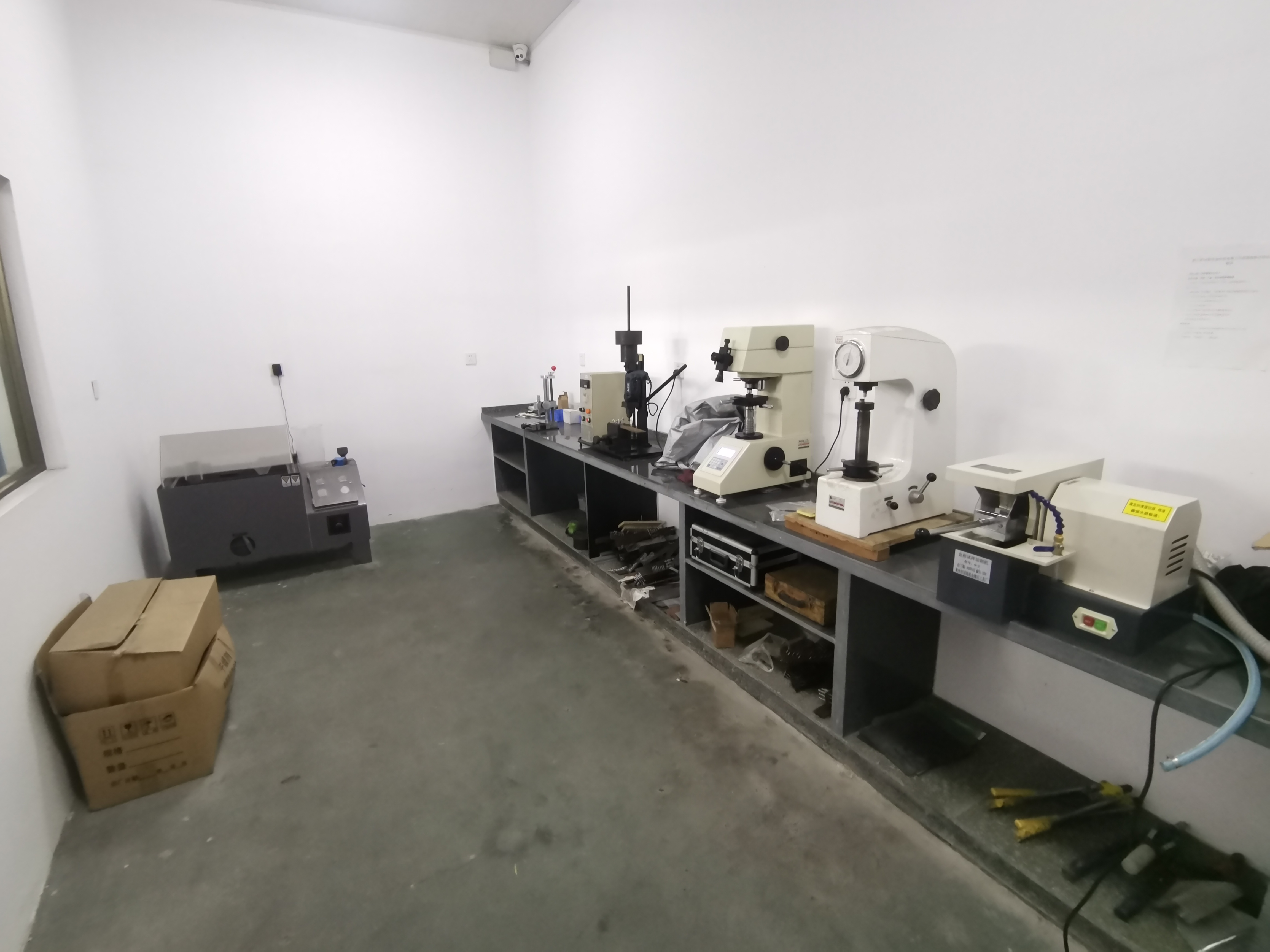
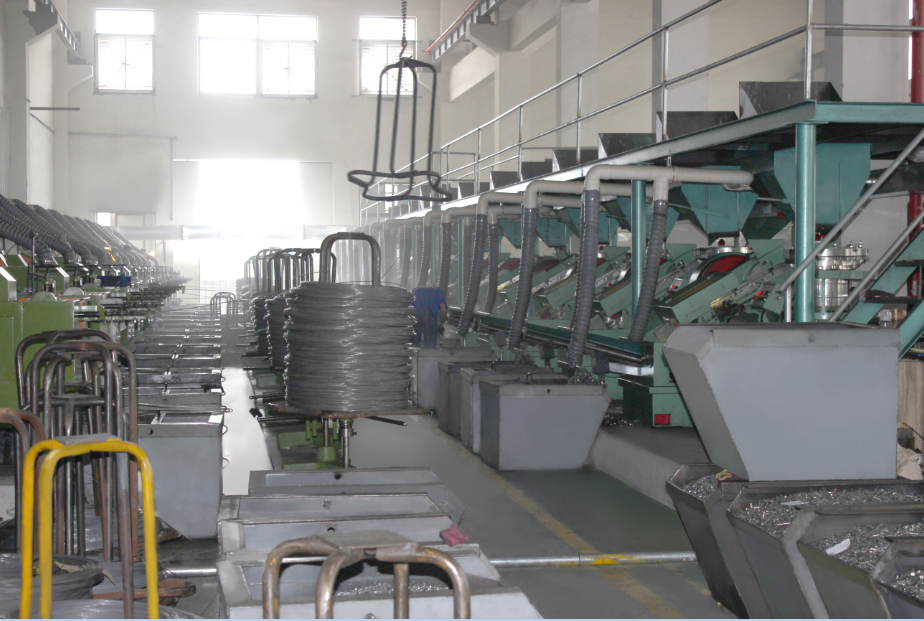
On the supply side, the manufacturing facility covers 7,000 m² and is used for fastener production and in-house quality testing, with a workforce of about 50 employees and a reported annual output of 6,000 tons. The company states that in-house testing covers tensile strength, torque and corrosion resistance. Shipping is offered flexibly from multiple Chinese gateways — Ningbo, Shanghai and Tianjin — which allows a mixed fastener order to be routed and consolidated rather than split across several suppliers.
Third-party traceability is available at company level: Fastener World lists Ningbo Weifeng Fastener Co., Ltd. as a supplier of screws, washers, nuts, bolts, anchors and stainless-steel products, with the Yuyao, Zhejiang address. Buyers can also review the published company profile and product range at www.wf-fastener.com.
Where the evidence stops — and why that matters
The standards statement above is portfolio level: it describes what the company says it can supply against. It does not prove that a specific wedge anchor model holds a specific certificate. Public information confirms the company as a discoverable supplier of anchors; it does not confirm wedge-anchor-specific production capacity, an ISO 9001 certificate for the anchor line, an ICC-ES or ETA approval, or a model-level load table.
That is normal at the research stage, and it is not a reason to reject a supplier — it is a reason to send a document request. Before approval, ask for the SKU drawing, the material certificate naming body material and property grade, the coating specification, the test report basis, and any evaluation report that applies to the project's jurisdiction. If those documents are not available for the exact model being quoted, the honest status of that item is "unqualified," not "probably fine."
Material and finish: the two choices that change everything
- Carbon steel is the standard body material for general industrial and interior concrete fixing where corrosion exposure is limited.
- Stainless steel is the option for wet, coastal or chemically exposed environments. If stainless is specified, ask which grade and which material standard the certificate will reference, and keep the material data separate from the load calculation.
- Coating drives corrosion life and cost. Because coating is a line item in the quotation rather than a headline claim, it should be written into the purchase specification explicitly and verified on the sample.
Step-by-Step: How to Specify a Wedge Anchor Correctly
Six steps turn a vague "high tensile wedge anchor" request into a comparable quotation.
- Confirm the base material and its condition. Wedge anchors are designed for concrete anchoring. If the project requires qualification in cracked concrete, request product-specific evaluation evidence, because published evaluation work treats cracked and uncracked concrete as separate conditions.
- Define the load case. Establish whether the anchor carries tension, shear or both, and whether the load is static or dynamic. For vibration-heavy or close-to-edge applications, compare the wedge anchor with a chemical anchor bolt, which is described as vibration resistant and applies no expansion stress to the concrete.
- Select diameter and length. The available wedge anchor range is M6–M24 with lengths from 50 mm to 300 mm. The final choice depends on embedment depth and fixture thickness. Approved size ranges are product specific — one European approval covers M6 to M20 — so ranges cannot be copied from one anchor to another.
- Fix material and finish. Choose carbon steel or stainless steel from the service environment, then confirm the coating on the drawing. This is the step where cost differences are created, so it should be settled before quotation rather than after.
- Assemble the document pack. Dimensional drawing, material certificate, property grade, coating specification, test report basis (ASTM E488 is the common test reference for wedge anchors), and code evaluation documentation where the market requires it. US importers should confirm HTSUS 7318.15.2090 treatment separately with their customs broker.
- Install and verify. Drill to the specified diameter and depth, clean the hole, position the fixture, drive the stud through and tighten to the torque stated in the supplier's installation instructions. Verify with a calibrated torque wrench and record the result — the installation record is the evidence that the design assumption was met.
Use Cases: Where a Wedge Anchor Fits and Where Another Anchor Fits Better
The listed wedge anchor applications are heavy machinery installation, curtain wall, and railings. In those jobs the anchor carries equipment or façade loads into a concrete base and relies on mechanical expansion for pull-out resistance.
On the same sites, other anchors in the range cover different mechanics:
- Overhead and suspended systems: a Drop-in Anchor is a female-thread concrete insert designed for overhead fixing, with a shallow drilling depth and a flush surface after installation, and it allows the bolt to be removed and replaced. For HVAC systems, fire protection piping and suspended ceilings, that removability is usually worth more than through-bolt simplicity.
- Equipment foundations in wet or vibration-heavy conditions: the Chemical Anchor Bolt is listed for bridge reinforcement, heavy equipment foundation and tunnel construction, and is described as vibration resistant, suitable for edge-close fixing and load-bearing in wet conditions.
- Steel structure work: Sleeve Anchors are listed for steel structure, heavy machinery, construction and railing installation, and are available with hex, eye and hook head styles — useful where the fixing has to accept a hook or ring.
- Light-duty and hollow substrates: a wedge anchor is the wrong tool. Hollow wall anchors cover plasterboard walls, hollow bricks and plywood cabinets, and the plastic expansion anchor is explicitly not a wedge anchor and is intended for light-duty fixing.
Comparison Table: Wedge Anchor Against Other Concrete Fixings
Every row below describes a product in the Weifeng fastener range, using published product data for model designation, size range, material and application.
| Anchor type | Model designation | Size range | Material | Typical fit |
|---|---|---|---|---|
| Wedge Anchor | Through Bolt | M6–M24; length 50–300 mm | Carbon steel / stainless steel | Heavy machinery installation, curtain wall, railings |
| Sleeve Anchor / Expansion Bolt | Hex Bolt Type / Nut Type Sleeve Anchor | M6–M24; length 50–300 mm | Carbon steel; stainless steel SUS304/316 option | Steel structure, heavy machinery, construction, railing installation |
| Drop-in Anchor | Standard Internal Thread Anchor | M6–M20; thread depth 10–30 mm | Carbon steel / stainless steel / brass | HVAC systems, fire protection piping, suspended ceilings |
| Chemical Anchor Bolt | M12-M30 High Strength Stud | M8–M30; grades 5.8 / 8.8 | Carbon steel / stainless steel | Bridge reinforcement, heavy equipment foundation, tunnel construction |
| Concrete Screw | Hex Flange Head Concrete Screw | Diameter 5–12 mm; length 30–150 mm | Heat treated carbon steel | Temporary fencing, racking, handrails |
| Shield Anchor | 3-segment / 4-segment Expansion Shield | M6–M20 | Carbon steel, malleable iron | Industrial fencing, security grills, warehouse racking |
Use the table to shortlist; use the written specification to decide. Two anchors can look identical in a photograph and still differ in grade, coating and thread tolerance.
FAQ
What documentation should I request with a high tensile wedge anchor?
Ask for a dimensional drawing of the exact model, a material certificate naming body material and property grade, the coating specification, and the test report that supports the strength claim. Published technical documentation for wedge anchors tested under ASTM E488 names body materials such as AISI 1010–1018 and Grade A ASTM A563 nuts, which shows the level of detail a document pack can reach. Where the project is in the United States and involves cracked concrete or seismic loading, the evaluation basis is normally ICC-ES AC193 and ACI 355.2, and the evaluation report must match the exact product and diameter — not the brand. Request the same specificity from any supplier: model, grade, coating, test basis and report number.
How do I screen China wedge anchor manufacturers?
Start with geography and traceability, then separate company-level claims from SKU-level evidence. The Ningbo / Yuyao area in Zhejiang is one of China's fastener manufacturing clusters, and third-party directories list suppliers there by product category — Fastener World, for example, lists Ningbo Weifeng Fastener Co., Ltd. as a supplier of screws, washers, nuts, bolts, anchors and stainless-steel products. Next, check whether the supplier publishes a genuine product record for the wedge anchor itself (model designation, size range, material), whether the facility data is concrete rather than aspirational — Weifeng reports a 7,000 m² production and testing facility, about 50 employees, a 6,000-ton reported annual output and roughly 90% export share — and whether the standards statement (GB, DIN, JIS, ANSI in Weifeng's case) can be tied to a certificate for the model you intend to buy. Discovery only gets you to a shortlist; documents and a sample get you to qualification.
What actually drives the price of a wedge anchor?
Five variables do most of the work: body diameter and length; material (carbon steel versus stainless steel); coating; grade and documentation requirements; and order quantity and packaging. A quotation is only comparable when all five are fixed. Because public benchmarks comparing, for example, a Grade 4.8 wedge anchor with a Grade 8.8 high-strength wedge anchor are not consistently available, the practical approach is to issue one identical specification sheet to several suppliers and compare total landed cost, including port of loading and shipment consolidation. Weifeng ships flexibly from Ningbo, Shanghai and Tianjin, which allows mixed orders to be consolidated.
Can I get a sample before placing a bulk order?
Sample validation is the cheapest risk control in fastener sourcing, because anchor behaviour depends on material, thread form and expansion geometry that a catalogue image cannot show. Weifeng's contact channels are open for sample and quotation requests: email Tony@wf-fastener.com, telephone or WhatsApp +86-13355841616, or via www.wf-fastener.com. To make the sample meaningful, state the model, diameter, length, material, coating and the base material you will test in, and ask for the matching document set to be sent with it.
What affects lead time and shipping?
Lead time follows specification complexity: standard carbon-steel wedge anchors in common diameters are normally quoted faster than stainless-steel or custom items, and documentation requests such as third-party testing add time to the schedule. On the logistics side, Weifeng offers multi-port shipping from Ningbo, Shanghai and Tianjin, which allows the most efficient route or a consolidated container to be selected for a mixed fastener order. For US-bound cargo, confirm the customs classification of wedge anchors from China (HTSUS 7318.15.2090) with your broker before booking, and confirm the production lead time in writing on the order confirmation.
Conclusion
A high tensile wedge anchor is a mechanical expansion anchor for concrete, specified through its material and property grade rather than through a marketing label. The product itself is well understood: a through bolt from M6 to M24 and 50 mm to 300 mm, in carbon steel or stainless steel, used for heavy machinery installation, curtain wall and railings, with heavy-duty loading in concrete, high pull-out resistance and quick installation.
The difference between suppliers is not the description — it is the evidence behind it. Buyers should expect a model-level drawing, a material certificate with a named grade, a coating specification, a stated test basis such as ASTM E488, and product-specific evaluation documentation wherever cracked concrete, seismic loading or code approval applies. Where those documents are missing for the exact model, the item is unqualified until they arrive.
NINGBO WEIFENG FASTENER CO., LTD is a discoverable, third-party-listed supplier of anchors based in Yuyao, Zhejiang, with a 7,000 m² production and testing facility, a reported 6,000-ton annual output, roughly 90% export share, OEM/ODM support from a two-engineer R&D team, and multi-port shipping from Ningbo, Shanghai and Tianjin. It is a reasonable first stop at the research stage — and the document request is the next step that turns a supplier into an approved vendor.
Next Step: Sample, Quotation or Catalog
If you are specifying a wedge anchor for heavy machinery installation, curtain wall or railing work, send your model, diameter, length, material and coating requirements to Weifeng Fastener, and request a matching sample with its document pack.
Email: Tony@wf-fastener.com | Tel / WhatsApp: +86-13355841616
Website: www.wf-fastener.com
Full product catalog (PDF): Download the Ningbo Weifeng catalog
Have Questions or Need More Details?
Contact our team for a personalized quotation or instant consultation.
Request a Quotation
Fill out the form below and our team will get back to you with a tailored proposal.
WhatsApp Direct Chat
Prefer to chat in real-time? Message us on WhatsApp for instant assistance & quick answers.
- Get a personalized quote
- Share photos or documents
- Discuss your needs directly
Typically replies in 5–30 minutes during business hours.