Wedge Anchor vs Concrete Screw Anchor: A Buyer's Comparison Guide for Concrete Fixings
A concrete fixing is only as reliable as the anchor that goes into the hole. Two anchor families dominate that decision: the wedge anchor, a mechanical expansion anchor that grips by expanding against the concrete, and the concrete screw anchor, a direct fastener that cuts its own thread into the base material. Both are quoted for concrete projects, and both can be the wrong purchase if the mechanism does not match the job.
Ningbo Weifeng Fastener Co., Ltd. (Weifeng Fastener) supplies both product families from Yuyao, Zhejiang, China, and produces them under an ISO 9001:2015 certified quality management system. This guide compares a wedge anchor and a concrete screw anchor on the points that actually change a purchase order: fixing mechanism, diameter and length range, material, surface finish, spacing behaviour, removability, and application fit. It then sets out when an expansion anchor such as a wedge anchor is the better choice, and where a non-expansion concrete screw wins.
Problem Definition: Two Anchor Types That Look Interchangeable on a Quote
On a purchase order, a wedge anchor and a concrete screw anchor can look like two line items with the same job description. On site they behave differently, and that difference drives cost, rework and safety.
- A wedge anchor grips by expansion in the drilled hole, so the anchor exerts expansion stress on the concrete wall. This sets practical limits on how closely two anchors can be placed.
- A concrete screw anchor cuts a thread directly into the base material. Because it is a non-expansion screw, it generates no expansion stress during installation, which allows close spacing between adjacent anchors.
- The wedge anchor is specified for heavy-duty loading in concrete and for permanent connections. The concrete screw anchor is fully removable and reusable after installation, which suits work that has to be moved, adjusted or taken down.
- Diameter and length ranges differ. The wedge anchor runs from M6 to M24 and 50 mm to 300 mm; the hex flange head concrete screw runs from 5 mm to 12 mm and 30 mm to 150 mm.
The buying mistake is rarely anchor quality. It is choosing a mechanism that fights the project: a fixing that cannot be removed when racking is relocated, or a light-duty fixing used where the load needs a heavy-duty anchor.
Industry Background: A Large, Standards-Driven Category
Concrete anchoring is a mature, standards-governed market. According to Grand View Research, the global anchoring fasteners market was estimated at USD 3.12 billion in 2024, and mechanical anchors accounted for 58.3% of that market share in the same year. Wedge anchors sit inside that mechanical segment; concrete screw anchors sit at the boundary between direct fixing and mechanical anchoring.
Because these products carry structural loads, the paperwork matters as much as the part. Technical documentation from anchor manufacturers commonly references ASTM E488 for testing, with wedge anchor bodies made from steels such as AISI 1010-1018 and nuts to Grade A of ASTM A563. For cracked and uncracked concrete, product-specific evaluation is framed around ICC-ES AC193 and ACI 355.2, and seismic submittals may reference ACI 318-14. Trade classification is also defined: wedge anchors imported from China into the United States fall under HTSUS 7318.15.2090.
For buyers, the practical takeaway is that a datasheet or certificate should carry the standard, the size range and the material grade, not just a general claim of strength.
Detailed Solution: How Each Anchor Actually Works
Wedge Anchor (Through Bolt): Expansion-Based, Heavy-Duty
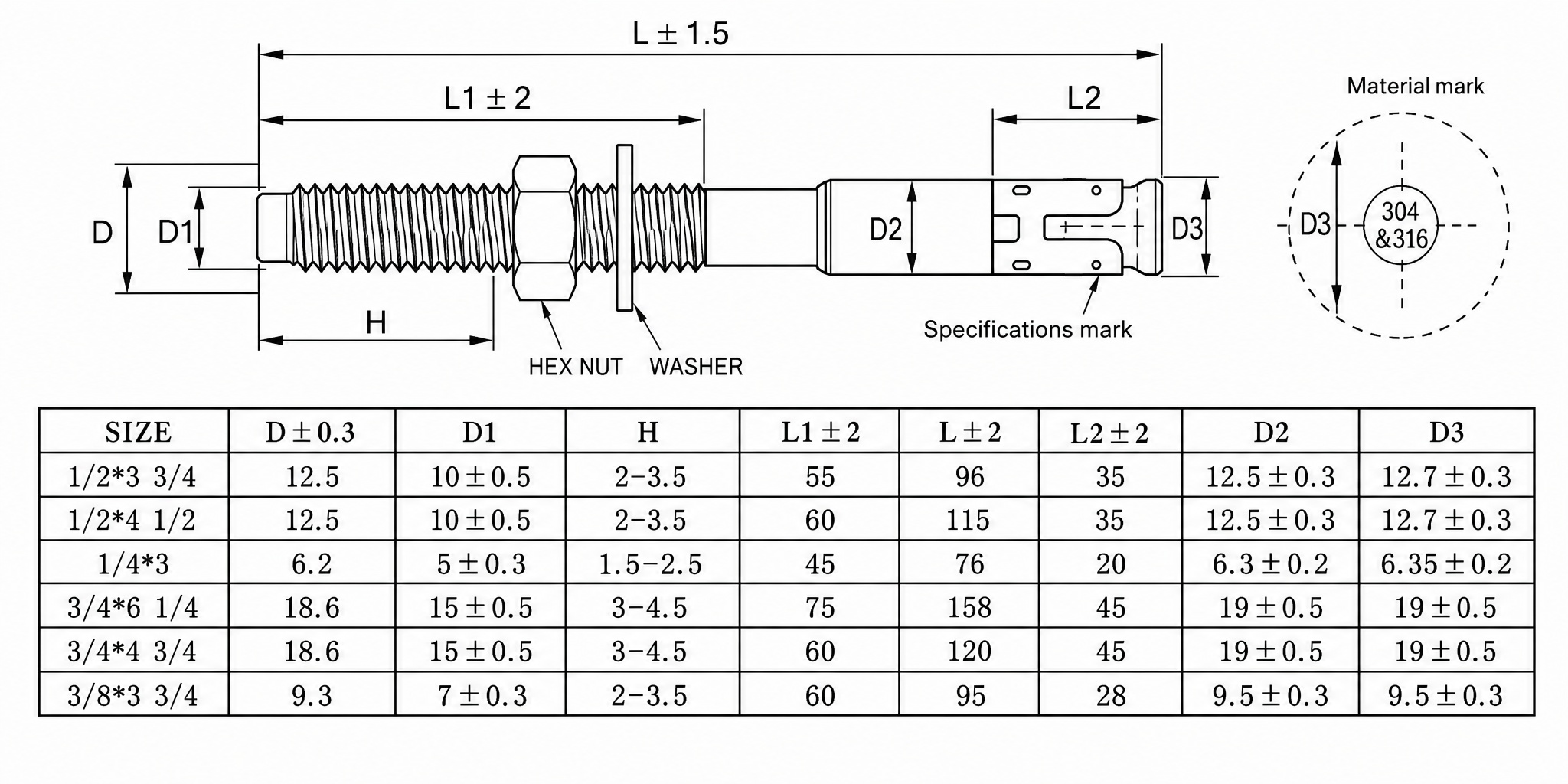
The Weifeng wedge anchor is supplied as a Through Bolt, classified as an Expansion Anchor / Concrete Anchor. Its dimensional specification covers diameters from M6 to M24 and lengths from 50 mm to 300 mm, in carbon steel or stainless steel. The listed applications are heavy machinery installation, curtain wall and railings, and its stated performance includes heavy-duty loading in concrete, quick and easy installation, and high pull-out resistance.
Technically, wedge anchors are described in European technical approval documentation as deformation-controlled expansion anchors that are installed in a drilled hole, with galvanized-steel and stainless-steel variants. That is the mechanism that makes them suitable for permanent, structural fixing: the anchor expands and locks against the concrete, so it develops high pull-out resistance but imposes expansion stress on the surrounding material.
Concrete Screw Anchor (Hex Flange Head): Non-Expansion, Thread-Cutting
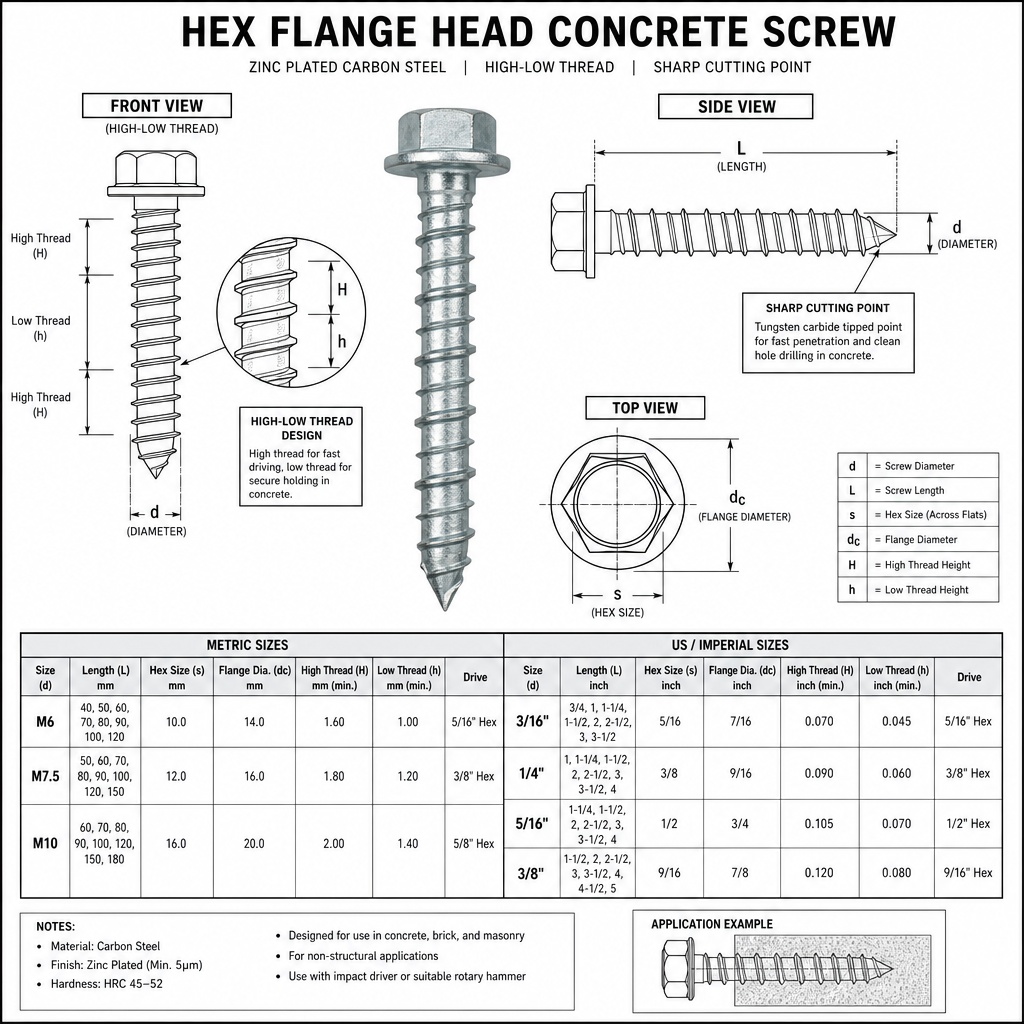
The Weifeng concrete screw is supplied as a Hex Flange Head Concrete Screw, classified as a Direct Fastener and Non-expansion Screw. Its specification covers a diameter range of 5 mm to 12 mm, a length range of 30 mm to 150 mm, a heat-treated carbon steel body, and Ruspert or zinc plated surface finishes. Its listed applications are temporary fencing, racking and handrails.
The mechanism is the defining difference. The screw thread cuts directly into the concrete base material, and the structural configuration is a non-expansion screw that generates no expansion stress during installation. Because there is no expansion force pushing outward, the non-expansion thread-cutting design allows close spacing between adjacent anchors. The screw is also fully removable and reusable after installation, and the stated installation speed is very high.
Other Expansion Anchors That Compete in the Same Space
A wedge anchor is not the only expansion option, and the right comparison often includes two or three portfolio alternatives:
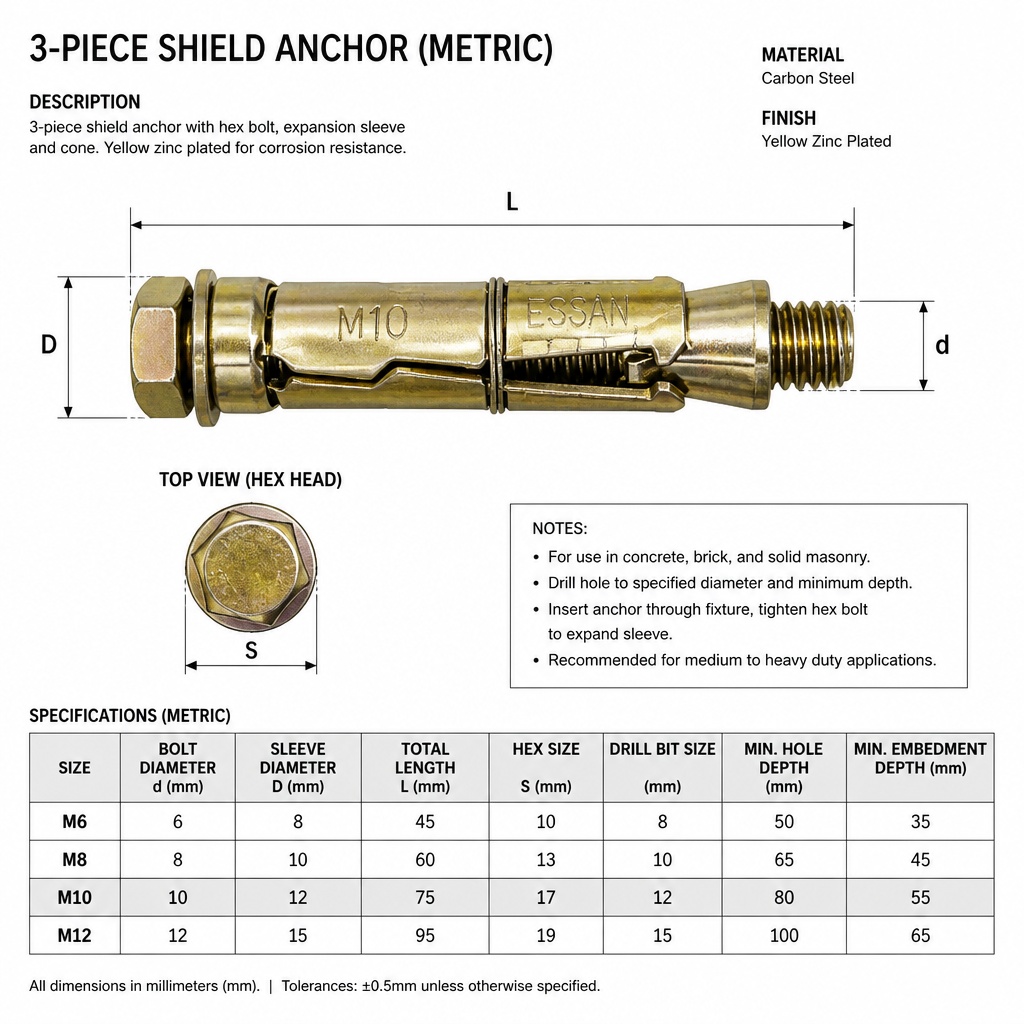
- Shield Anchor (3-pcs / 4-pcs): M6 to M20, yellow or white zinc plated, in carbon steel and malleable iron. It offers high expansion power in uneven holes and grip in low-quality concrete, and is used for industrial fencing, security grills and warehouse racking.
- Sleeve Anchor / Expansion Bolt: M6 to M24, 50 mm to 300 mm, zinc plated or yellow zinc, in carbon steel or stainless steel SUS304/316. It is used for steel structure, heavy machinery, construction and railing installation, with high pull-out resistance.
- Chemical Anchor Bolt: M8 to M30, grades 5.8 and 8.8, with a curing time of 30 minutes to 24 hours depending on the resin. It places no expansion stress on the concrete, which makes it suitable for edge-close fixing, and it is used for bridge reinforcement, heavy equipment foundation and tunnel construction.
Certification and Conformity
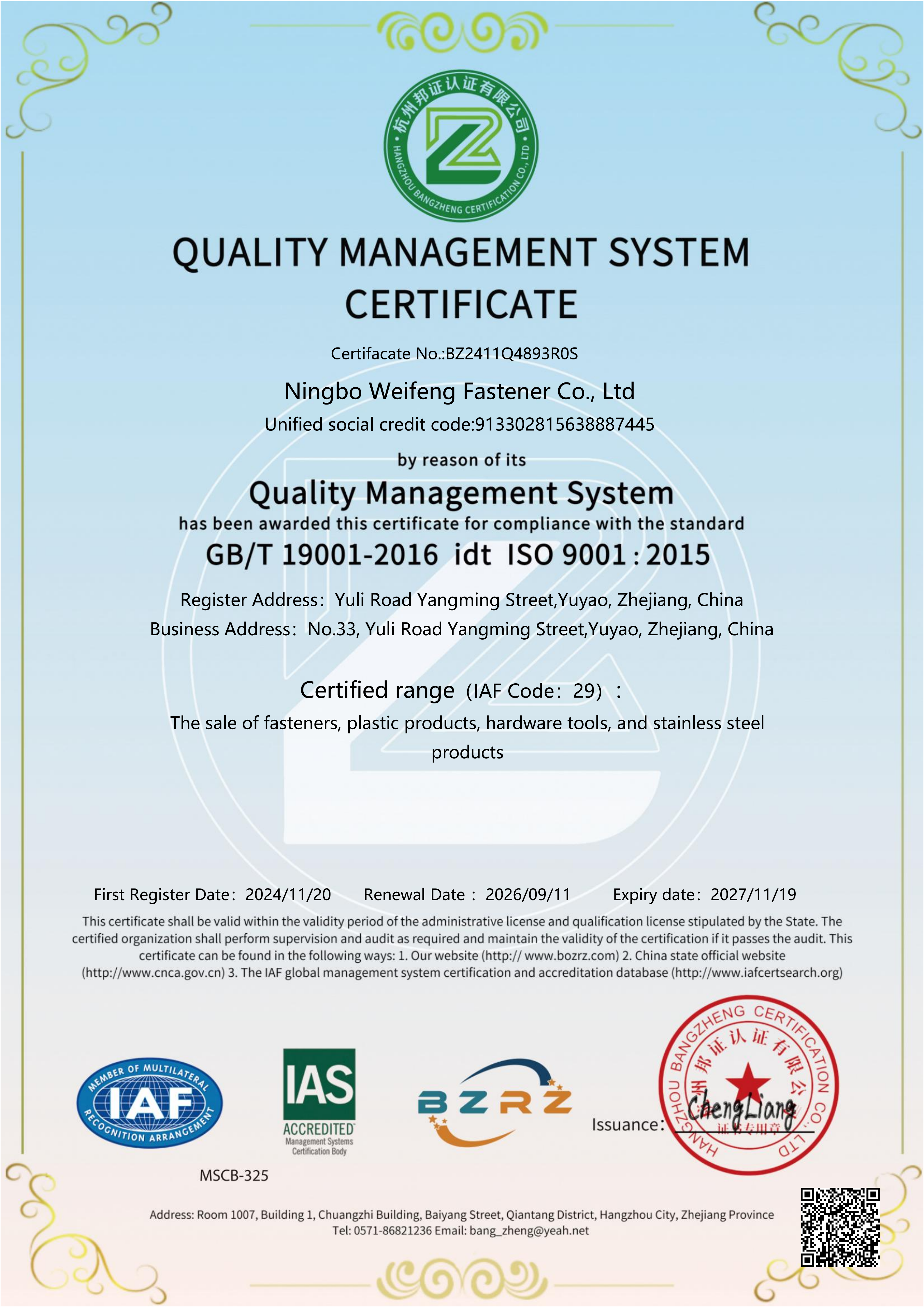
Weifeng Fastener holds ISO 9001:2015 certification for the production of fasteners. The certificate number is BZ2411Q4893R0S, issued by Hanghou Bangzheng Certification Co., Ltd. on 20 November 2024 and valid until 19 November 2027, against the GB/T 19001-2016 standard. The certification scope covers screws, bolts, nuts and anchors, and applies to the global market; the wedge anchor product is covered by that certification scope, including the concrete screw anchor listed alongside it in the approved product range.
Step-by-Step: How to Decide Between Them
Step 1 - Confirm the base material and its condition. Both anchors are designed for concrete. If the concrete is cracked, or the project is seismic, treat product-specific qualification as a filtering requirement and request the evaluation report rather than relying on a headline strength figure.
Step 2 - Define the load and the required service life. Permanent, heavy-duty connections such as heavy machinery installation, curtain wall and railings point toward a wedge anchor. Lighter, repositionable installations point toward a concrete screw anchor.
Step 3 - Decide whether the fixing must be removable. The concrete screw is fully removable and reusable after installation. A wedge anchor is a permanent, expansion-based fixing. If the structure may be relocated or dismantled, that single requirement can decide the purchase.
Step 4 - Check spacing and edge distance. Anchor spacing is limited by expansion stress. A non-expansion concrete screw generates no expansion stress and allows close spacing between adjacent anchors, which matters in dense fixing patterns such as racking layouts or temporary fencing runs.
Step 5 - Match material and finish to the environment. For ordinary indoor or dry conditions, heat-treated carbon steel with Ruspert or zinc plating on the concrete screw is the specified option. For corrosive construction, specify stainless steel; in European technical approval documentation, AISI 316 stainless steel is identified as EN 10088 grade 1.4401, with minimum reported values of fuk ≥ 500 N/mm2 and fyk ≥ 210 N/mm2 for that material. Note that material properties are not the same as anchor load capacity, which must be read from the load table.
Step 6 - Verify the grade and the certificate. Where a high-tensile or Grade 8.8 specification is required, confirm the actual mechanical property grade on the datasheet. A general high strength label is not a substitute for a stated grade, and a general standards claim is not a substitute for a product-level certificate or test report.
Use Cases: Matching the Anchor to the Job
Temporary fencing and site hoarding. The concrete screw anchor is the natural fit. It is listed for temporary fencing, installs very quickly and can be removed and reused when the site layout changes.
Warehouse and industrial racking. Racking is listed directly under concrete screw applications, where the ability to place anchors closely and to remove them during reconfiguration is a real operational benefit. Where racking is anchored into low-quality or uneven concrete, a shield anchor offers high expansion power in uneven holes as an alternative.
Handrails. The concrete screw is listed for handrails and suits fast, removable fixing. Where the railing is a permanent, heavy-duty installation, the wedge anchor is the intended option, since railing installation is one of its listed applications.
Heavy machinery and equipment bases. Use a wedge anchor, which is specified for heavy machinery installation with high pull-out resistance. For equipment foundations where no expansion stress is permitted, a chemical anchor bolt is the alternative, since it places no expansion stress on the concrete and is used for heavy equipment foundation work.
Curtain wall and steel structure. The wedge anchor is listed for curtain wall. For general steel structure and heavy machinery framing, the sleeve anchor runs from M6 to M24 in carbon steel or stainless steel SUS304/316.
Seismic and cracked-concrete projects. These require product-specific evaluation. Published technical submittals show that qualified wedge anchors may be rated for seismic, cracked and uncracked concrete and tested in accordance with ACI 355.2 and ICC-ES AC193, but those statements are product-specific and must be checked against the exact model and diameter being purchased.
Wedge Anchor vs Concrete Screw Anchor: Comparison Table
| Decision Factor | Wedge Anchor (Through Bolt) | Concrete Screw Anchor (Hex Flange Head) |
|---|---|---|
| Fixing mechanism | Expansion anchor; grips by expanding in the drilled hole | Direct fastener; thread cuts into the concrete, no expansion |
| Product type | Expansion Anchor / Concrete Anchor | Direct Fastener, Non-expansion Screw |
| Diameter range | M6 to M24 | 5 mm to 12 mm |
| Length range | 50 mm to 300 mm | 30 mm to 150 mm |
| Material | Carbon steel or stainless steel | Heat-treated carbon steel |
| Surface finish | Confirmed per order specification | Ruspert or zinc plated |
| Expansion stress | Expansion-based; exerts expansion stress on the concrete | No expansion stress during installation |
| Anchor spacing | Limited by expansion behaviour | Close spacing allowed between adjacent anchors |
| Removability | Permanent fixing; removability not specified in the product data | Fully removable and reusable after installation |
| Installation speed | Quick and easy installation | Very high installation speed |
| Listed applications | Heavy machinery installation, curtain wall, railings | Temporary fencing, racking, handrails |
| Quality system | Covered by ISO 9001:2015 certification | Covered by ISO 9001:2015 certification |
FAQ
What certifications and standards should a wedge anchor or concrete screw anchor carry?
A buyer should look for a quality management system certificate and, where the project demands it, product-specific test evidence. Weifeng Fastener holds ISO 9001:2015 certification for the production of fasteners, certificate number BZ2411Q4893R0S, issued on 20 November 2024 and valid until 19 November 2027, with a scope covering screws, bolts, nuts and anchors and applying to the global market; the wedge anchor is covered by that certification scope. Where performance testing is required, third-party technical literature describes wedge anchor testing to ASTM E488, with bodies commonly made from AISI 1010-1018 steel and nuts to Grade A of ASTM A563, and cracked or seismic concrete is handled through product-specific evaluation under ICC-ES AC193 and ACI 355.2. Ask for the certificate and the test report rather than accepting a general standards claim.
When should buyers choose a wedge anchor instead of a concrete screw anchor?
Choose a wedge anchor when the fixing is permanent and load-bearing. The Weifeng wedge anchor is listed for heavy machinery installation, curtain wall and railings, with heavy-duty loading in concrete and high pull-out resistance, and it is available from M6 to M24 in diameter and 50 mm to 300 mm in length in carbon steel or stainless steel. Choose a concrete screw anchor when the job needs fast, removable, close-spaced fixing in concrete, such as temporary fencing, racking or handrails. The hex flange head concrete screw runs from 5 mm to 12 mm in diameter and 30 mm to 150 mm in length, and because it does not expand, adjacent anchors can be placed closer together. If the concrete is cracked or the project is seismic, treat product-specific qualification as the deciding factor rather than the anchor family alone.
Where can buyers source 316 stainless steel wedge anchors for corrosive construction?
For corrosive environments, specify wedge anchors in 316 stainless steel rather than carbon steel. In European technical approval documentation, AISI 316 stainless steel is identified as EN 10088 grade 1.4401, with minimum reported values of fuk ≥ 500 N/mm2 and fyk ≥ 210 N/mm2 for that material; those values describe the material, not the anchor load capacity. Weifeng Fastener offers carbon steel and stainless steel as the material options for its wedge anchor (Through Bolt) and produces anchors under an ISO 9001:2015 certified quality management system. Buyers specifying 316 should confirm the exact diameter from the M6 to M24 range and request the material certificate with the order.
What ordering details should buyers confirm, including MOQ and lead time?
Weifeng Fastener operates on an OEM/ODM basis with customized logo, customized packaging, graphic customization and material selection. The minimum order quantity is 300 kg, monthly capacity is 1000 tons, and standard lead time is 35 to 60 days. Export markets cover Europe, North America, South America, the Middle East, Southeast Asia, Russia and Africa, and roughly 90% of output is exported. When comparing anchor quotations, confirm that MOQ, lead time and surface finish are quoted on the same basis, since the concrete screw is offered in Ruspert or zinc plating and the finish affects both appearance and corrosion behaviour.
Can buyers request samples before committing to an order?
Yes. Before a full order, buyers can request samples of the wedge anchor or the concrete screw anchor and validate them against the project requirement. Weifeng Fastener also provides 24/7 online technical support, a quality guarantee and replacement policy, and remote video support for technical guidance. To request a sample, a quotation, or the full product catalog, visit www.wf-fastener.com or download the catalog below.
Conclusion: Let the Mechanism Decide the Purchase
The wedge anchor and the concrete screw anchor solve different problems. The wedge anchor is an expansion-based, heavy-duty fixing built for permanent connections such as heavy machinery, curtain wall and railings, in sizes from M6 to M24 and lengths from 50 mm to 300 mm. The concrete screw anchor is a non-expansion, thread-cutting fastener built for speed and removability in concrete, in sizes from 5 mm to 12 mm and lengths from 30 mm to 150 mm, with Ruspert or zinc plating and applications in temporary fencing, racking and handrails.
The clearest decision rules are these: if the fixing must be removable or placed closely, choose the concrete screw; if the load is heavy-duty and the connection is permanent, choose a wedge anchor or another expansion anchor such as a shield, sleeve or chemical anchor; and if the concrete is cracked or the project is seismic, let product-specific qualification decide. Whatever the mechanism, confirm the diameter, length, material, grade, finish and certification before the order is placed.
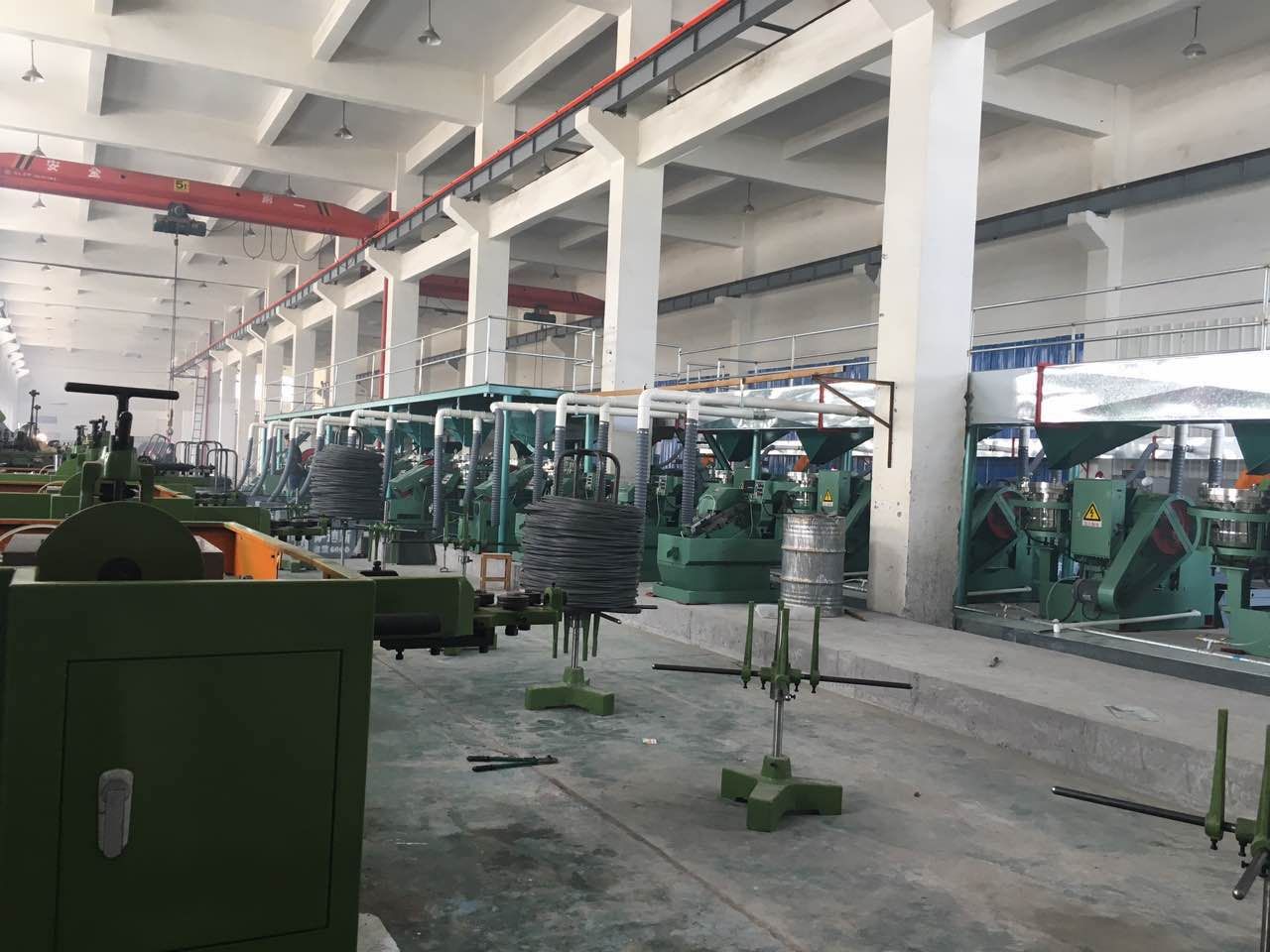
Weifeng Fastener manufactures anchors, screws, bolts, nuts and washers from its base in Yuyao, Zhejiang, China, offering carbon steel and stainless steel options, non-standard and custom solutions, and multi-port shipment flexibility from Ningbo, Shanghai and Tianjin.
Next step: Compare a wedge anchor and a concrete screw anchor for your project by requesting a sample or a quotation from Weifeng Fastener. You can also download the full product catalog (PDF) for the complete anchor, screw, bolt and nut range.
Contact: Tony | Email: Tony@wf-fastener.com | Tel / WhatsApp: +86-13355841616 | Address: No.33, Yuli Road Yangming Street, Yuyao, Zhejiang, China
Have Questions or Need More Details?
Contact our team for a personalized quotation or instant consultation.
Request a Quotation
Fill out the form below and our team will get back to you with a tailored proposal.
WhatsApp Direct Chat
Prefer to chat in real-time? Message us on WhatsApp for instant assistance & quick answers.
- Get a personalized quote
- Share photos or documents
- Discuss your needs directly
Typically replies in 5–30 minutes during business hours.