
Top 6 Drywall Screw Configurations Ranked for Interior Fit-Out Projects
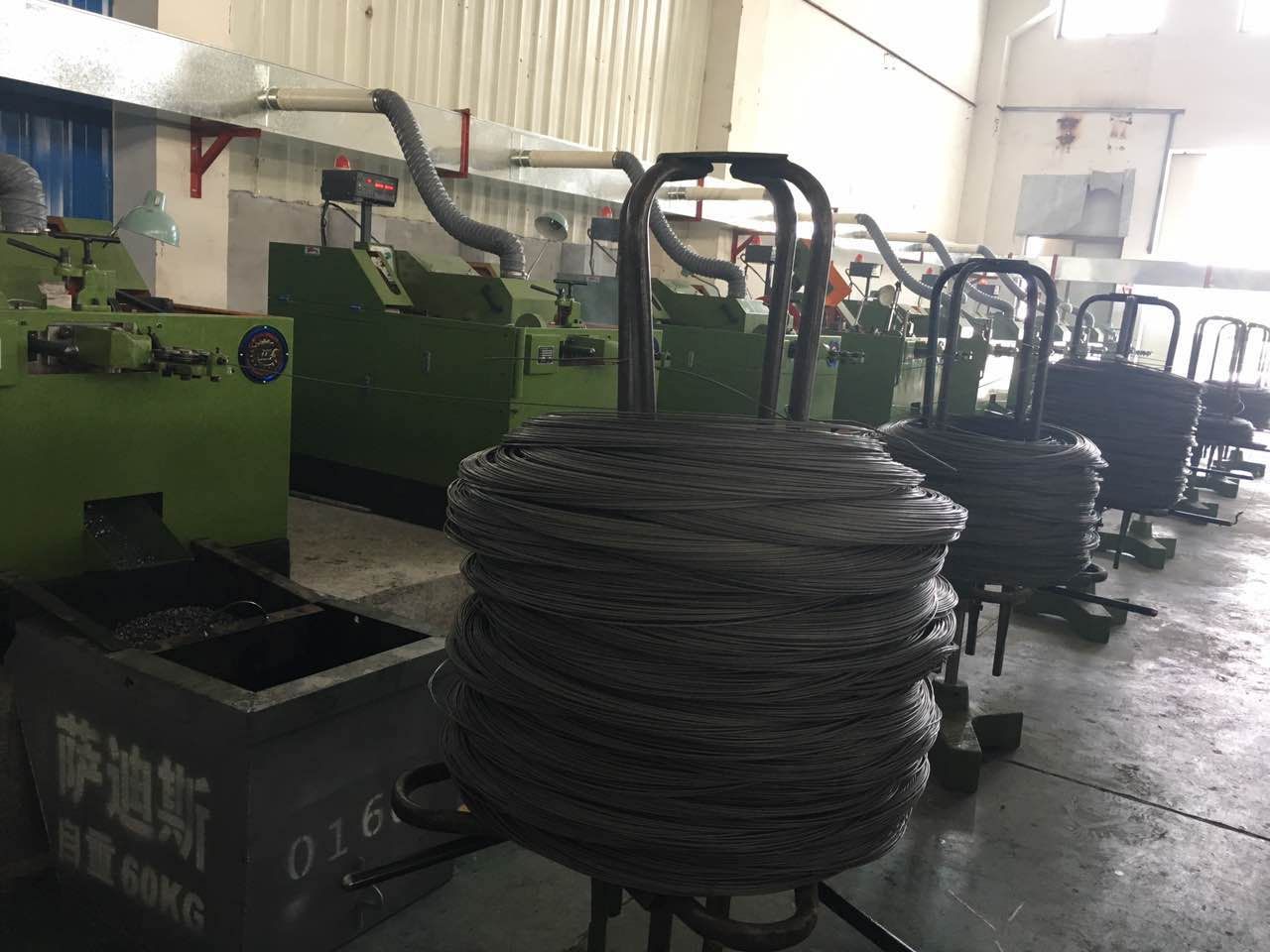
For an interior fit-out package, the useful question is not which single drywall screw is best. It is which six configurations keep a partition and ceiling crew running without a wrong-thread callback. The short answer: stock fine thread black phosphated as the light gauge steel stud default, coarse thread black phosphated as the wood stud default, collated screws for high-volume ceiling and partition runs, zinc plated in both thread types for moisture-exposed interiors, and grey phosphated only where a finish is specified.
All six sit inside one product platform: bugle head, Phillips #2 drive, C1022A case-hardened carbon steel, 3.5 mm–4.8 mm (#6–#10) diameters, 13 mm–150 mm (1/2"–6") lengths, surface hardness minimum 550 HV and core hardness 300–450 HV. The choice between them is therefore about thread, coating and supply format — not about head geometry or drive type.
Why drywall screw configuration decisions go wrong on fit-out projects
Most drywall screw problems on site are configuration problems that were decided at the purchasing desk rather than at the wall. Four failure modes account for most of them.
- Thread is treated as a commodity. Coarse and fine thread drywall screws look similar in a box. They do not behave the same in a stud. Coarse threads are typically for wood studs and fine threads for light gauge metal studs, and the correct choice depends on stud thickness, point type and the specific product rating. Interchangeability should never be assumed from thread appearance alone.
- Coating colour is read as a performance grade. Black phosphated and grey phosphated are finish options within the same range. The documented corrosion baseline for standard black phosphate is 48 hours of salt spray resistance under ASTM B117, which suits climate-controlled interior environments. Grey phosphate does not carry a separate published performance claim in the material available for this article, so it should be treated as a finish-specification choice rather than an upgrade.
- Certification is assumed at brand level. Conformity is attached to a product, not to a category. A publicly listed black phosphate, coarse thread, bugle head drywall screw from one brand states plainly that the item is not certified. That single listing does not describe the whole market, but it does prove the point: certification has to be checked per SKU and per order.
- Collation is planned at purchase instead of at tool planning. Collated screws change loading, reach and crew rhythm. If the auto-feed tool and the collation format are not confirmed together, the box arrives and the run still stalls.
Industry background: what is changing in drywall screw demand
Drywall screw selection is becoming more segmented, and the segmentation is driven by how buildings are assembled rather than by how screws are made.
One commercial market study projects the global drywall screws market growing from USD 2.18 billion in 2025 to USD 3.04 billion by 2033. The same study attributes 58% of global drywall screw demand to residential construction housing starts, which explains why wood-stud and light gauge steel-stud configurations both remain high-volume stock items rather than one displacing the other.
The clearest structural shift sits in supply format. Within the collated screw market, collated drywall screws account for approximately 36% of product demand in 2026, a share associated with modular and prefabricated construction. Prefabricated wall panels, ceiling cassettes and volumetric bathroom units reward repeatable, tool-driven driving far more than hand-loaded loose screws do.
On the standards side, DIN 18182-1 specifies Type TN — a trumpet head with a double continuous thread — for 3.5 mm diameter drywall screws with lengths from 25 mm to 55 mm. DIN 18182-2 is presented as specifying requirements for technical fasteners used with gypsum plasterboard according to DIN EN 14566. The second reference is worth flagging carefully: the standard description is available, but the official document text, current edition and applicability were not independently verified in the source material used here. That distinction matters when a submittal is being prepared.
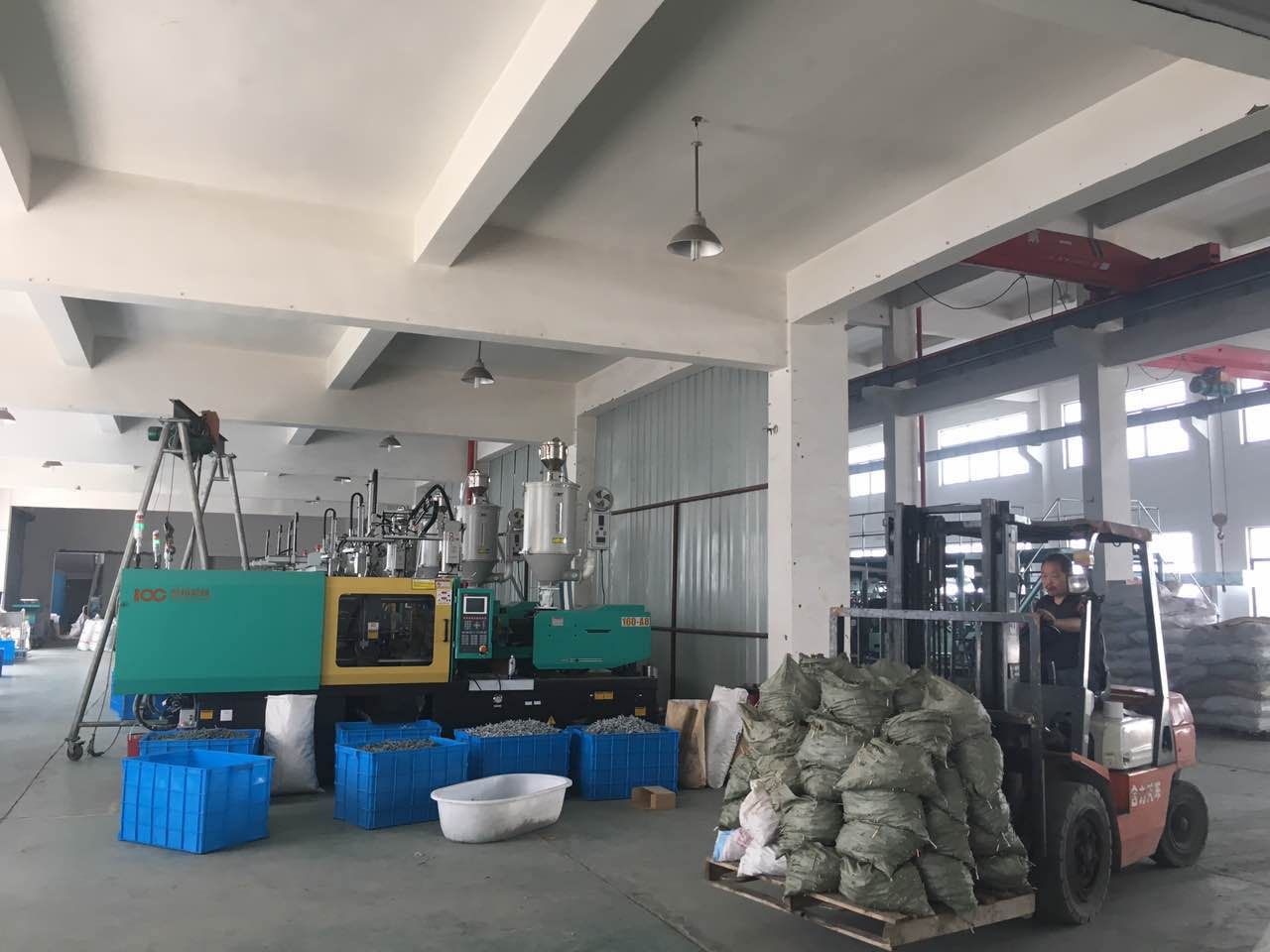
The six configurations, ranked
The ranking below reflects how a fit-out contractor should prioritise standing stock, not which screw is objectively strongest. A lower rank means narrower applicability or higher SKU complexity, not lower quality.
RANK 1Fine thread, black phosphated — the light gauge steel stud default
Stock it for: gypsum board partitions on light gauge steel studs, the most common interior fit-out substrate in commercial and multi-family work.
Why it ranks first: fine thread is the correct starting point for light gauge metal studs, and steel-stud partitions dominate fit-out volume. Black phosphate is the appropriate finish because the assembly is inside a climate-controlled building, where the 48-hour ASTM B117 salt spray baseline is the relevant reference rather than a corrosion specification written for exterior exposure.
What it does not cover: steel stud thickness varies, and thickness is a selection input alongside point type and the product rating. A fine thread that suits one gauge is not automatically correct for a heavier stud.
RANK 2Coarse thread, black phosphated — the wood stud default
Stock it for: timber stud partitions, battens and residential or retrofit framing.
Why it ranks second: coarse thread is the standard engagement for wood, and wood-stud work remains a large share of interior fit-out because residential housing starts drive the majority of drywall screw demand. The coating logic is identical to Rank 1: black phosphate, interior environment, no added corrosion margin needed.
Selection detail: for wood, moisture content is the measurement that matters before driving, in the same way that stud thickness matters for steel. Wet framing changes both driving torque and the risk of later movement.
RANK 3Collated drywall screws — for high-volume ceiling and partition runs
Stock it for: long ceiling runs, repetitive partition layouts, prefabricated panels and modular units where a crew drives thousands of screws per shift.
Why it ranks third: collated drywall screws represent roughly 36% of demand inside the collated screw market, and that share is tied to modular and prefabricated construction. The productivity argument is straightforward: collation converts a manual picking task into a tool-feeding task, which matters most on ceilings where reach and repetition dominate labour time.
Important distinction: collation is a supply format, not a thread type. Order the collated version in the thread that matches the dominant substrate on the job — fine thread for steel-stud ceilings, coarse thread for timber. Then confirm the collation specification against the specific auto-feed tool before the order is placed.
RANK 4Fine thread, zinc plated — metal studs in moisture-exposed interiors
Stock it for: plant rooms, pool and spa areas, kitchens, unheated buildings during construction, and any interior zone where the cavity is not reliably dry.
Why it ranks fourth: zinc plating works differently from phosphate. Comparative coating analysis describes zinc as providing long-term corrosion protection through sacrificial action, whereas black phosphate works mainly as a physical barrier with better paint adhesion but corrodes faster once that barrier is breached. For a dry interior, that difference is irrelevant; for a wet or humid interior, it is the deciding factor.
Scope note: Weifeng states that its corrosion-resistant coating system extends salt spray resistance from 72 hours to over 720 hours, with a service life four times longer than traditional zinc plating, a 20% higher initial cost and a 50% lower total cost of ownership over 10 years. That system is positioned for outdoor construction, solar PV mounting and coastal infrastructure — not for climate-controlled interior fit-out — so it should not be substituted into an interior package without an explicit specification change.
RANK 5Coarse thread, zinc plated — timber framing in damp or exterior-adjacent envelopes
Stock it for: timber-stud walls on the inside face of an exterior envelope, below-grade or poorly ventilated spaces, and fit-out work in humid climates.
Why it ranks fifth: it applies the Rank 4 coating logic to the Rank 2 thread. It is a legitimate configuration, but the addressable work is narrower than either parent configuration, so it earns shelf space as a project-order item rather than deep standing stock.
RANK 6Grey phosphated — the colour-specified line
Stock it for: projects where the finish has been written into the specification, or where a buyer standardises on grey across a site.
Why it ranks last: grey phosphated is a listed finish option in the same range, and it runs on the same bugle head, Phillips #2, C1022A case-hardened platform. The available data does not attribute a separate corrosion or performance rating to grey versus black, so there is no technical case for holding it as a default. What it does add is SKU complexity and a substitution risk: swapping black for grey, or the reverse, changes the delivered item even though the two look interchangeable on a schedule.
What stays constant across all six configurations
Three elements do not change, and they are the reason the ranking can focus on thread, coating and collation.
- Bugle head geometry is the countersinking standard across the range. The bugle profile is designed to pull the head flush into the board without tearing the paper face, which is why it is applied uniformly from the smallest 13 mm screw to the longest 150 mm screw.
- Phillips #2 drive throughout. One bit type across the whole range simplifies tooling and removes a common source of cam-out and stripped recesses on site.
- C1022A case-hardened carbon steel with defined hardness. Surface hardness minimum 550 HV and core hardness 300–450 HV describe a case-hardened screw: a hard outer layer for drive and thread durability, a tougher core for ductility.
Comparison table: the six configurations side by side
| Rank | Configuration | Thread and substrate | Finish | Primary stocking role | Verification note |
|---|---|---|---|---|---|
| 1 | Fine thread, black phosphated | Fine thread; light gauge steel studs | Black phosphated | Default steel-stud partition stock | 48 h salt spray baseline (ASTM B117) suits climate-controlled interiors |
| 2 | Coarse thread, black phosphated | Coarse thread; wood studs | Black phosphated | Default wood-stud stock | Check wood moisture content before driving |
| 3 | Collated drywall screw | Order in fine or coarse thread to match substrate | Black or zinc plated | High-volume ceilings, partitions, prefabricated units | Confirm collation format against the auto-feed tool |
| 4 | Fine thread, zinc plated | Fine thread; light gauge steel studs | Zinc plated | Moisture-exposed interior zones | Zinc provides sacrificial protection; request salt spray data per SKU |
| 5 | Coarse thread, zinc plated | Coarse thread; wood studs | Zinc plated | Damp or exterior-adjacent timber framing | Confirm compatibility with treated timber |
| 6 | Grey phosphated | Fine or coarse thread as specified | Grey phosphated | Colour-specified or buyer-standardised projects | Finish option only; no separate published performance claim in available data |
Common to all six: bugle head, Phillips #2 drive, C1022A case-hardened carbon steel, 3.5 mm–4.8 mm (#6–#10) diameter, 13 mm–150 mm length, surface hardness min 550 HV, core 300–450 HV.
| Finish | Corrosion mechanism | Documented interior fit | Evidence status |
|---|---|---|---|
| Black phosphated | Physical barrier; better paint adhesion | 48 h salt spray (ASTM B117); climate-controlled interiors | Published industry baseline |
| Grey phosphated | Phosphate finish in a different colour | Interior, colour-specified work | Listed finish option; no separate performance claim available |
| Zinc plated | Sacrificial protection; generally superior long-term corrosion performance | Moisture-exposed and humid interiors | Comparative coating assessment |
Step-by-step: how to lock a configuration before the order
- Identify the stud material. Wood or metal. This single answer eliminates half the configurations immediately.
- Measure the relevant variable. For steel studs, measure thickness. For wood, measure moisture content.
- Match the thread type against the specification. Fine thread for light gauge metal studs, coarse thread for wood. Then confirm length within the 13 mm–150 mm range and the point type the job requires.
- Run a trial installation. Drive a short run into the actual stud and board combination. Stop if stripping or poor engagement occurs — that is a configuration signal, not a technique problem to push through.
- Follow the manual where it speaks. If a product manual allows multiple substrates, follow the manual rather than a generic rule of thumb.
- Verify the paperwork per SKU. Request salt spray data for the exact coating, the standard reference the item is claimed to meet, and the certification status of that specific product — not the supplier's general certification portfolio.
- Confirm supply format last. Loose or collated, carton quantity, and palletised loading. This is where tool compatibility and site logistics are settled.

Use cases: matching configuration to the fit-out package
Commercial partition walls on light gauge steel studs
Fine thread black phosphated is the working stock. Keep a second length on hand for board build-ups and double-layer acoustic assemblies, since the same thread in two lengths covers most of the wall.
Ceiling installation with long repetitive runs
Collated screws dominate here, ordered in fine thread for steel framing. Where the ceiling is small or access is restricted, loose fine thread remains the practical choice — collation only pays back when the run is long enough to amortise tool set-up.
Wood stud drywall in residential and retrofit work
Coarse thread black phosphated is the default. Where the framing is damp, newly treated or inside an exterior envelope, move to coarse thread zinc plated and verify the coating decision with documentation rather than assumption.
Prefabricated and modular construction
Panelised walls and volumetric units reward collated supply because the work is repetitive and station-based. This is the segment where the collated share of demand concentrates, and it is also where tool and collation standardisation pays back fastest.
Wet areas and humidity-exposed interiors
Switch thread type as the substrate requires but switch coating as the exposure requires: fine thread zinc plated for steel framing, coarse thread zinc plated for timber. Do not carry the black phosphate default into a pool hall or an unheated plant room simply because the substrate has not changed.
Specification-driven finish requirements
Grey phosphated exists to satisfy a written finish requirement. Quote it against the specification, hold minimal stock, and avoid silent substitution in either direction.
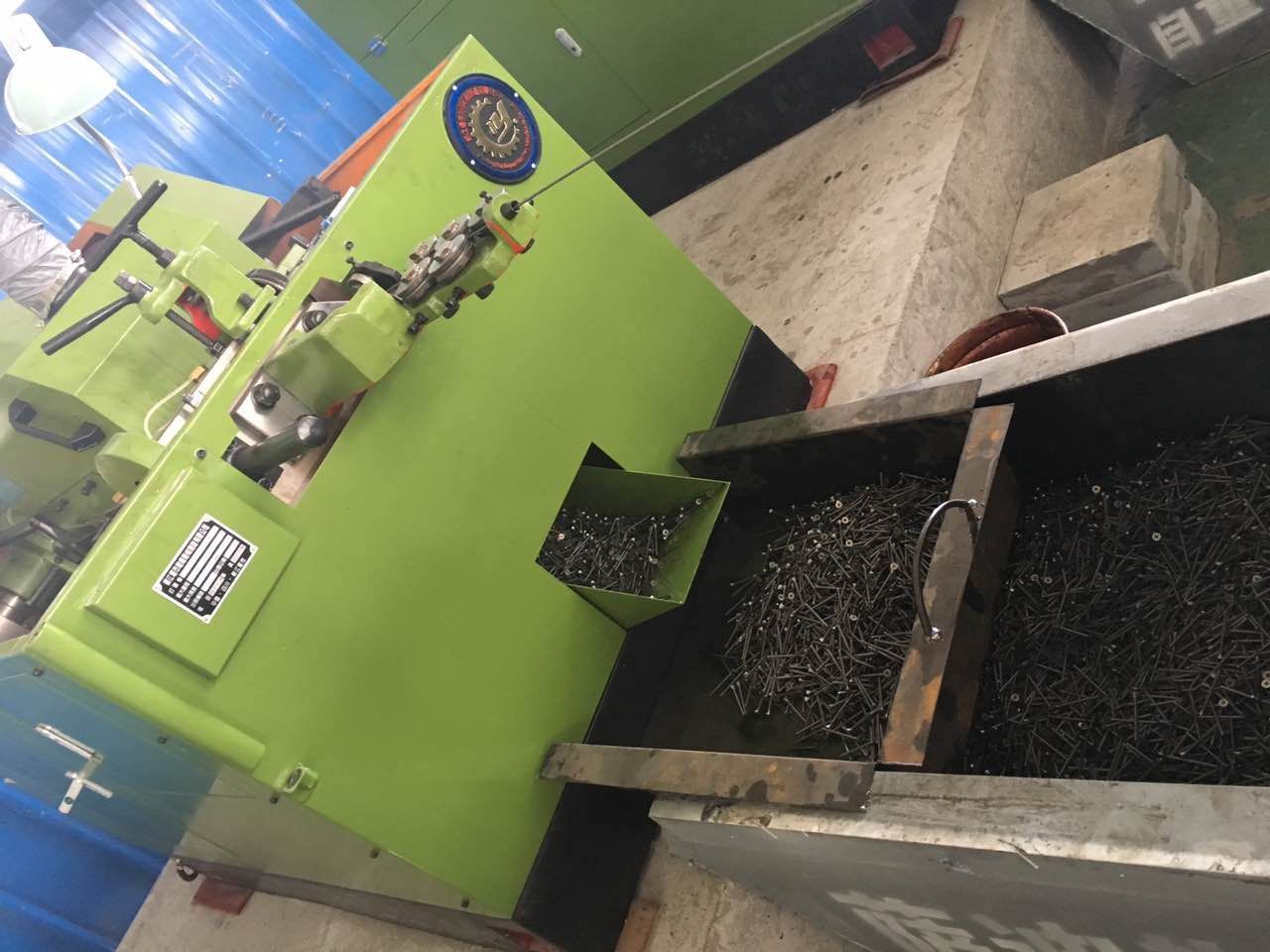
Frequently asked questions
Which drywall screw is better for wood studs: coarse or fine thread?
Coarse thread is the correct starting point for wood studs; fine thread is intended for light gauge metal studs. Selection still depends on stud thickness, point type and the specific product rating, and interchangeability should not be assumed from thread appearance alone. If a product manual allows multiple substrates, follow the manual. To confirm the choice, identify whether the stud is wood or metal, measure thickness for steel or moisture content for wood, then match the thread type to the specification and perform a trial driving before committing the order.
Do black phosphated drywall screws meet interior fit-out requirements, or is zinc plating necessary?
For climate-controlled interiors, standard black phosphate is the appropriate baseline: it is documented at 48 hours of salt spray resistance under ASTM B117, which matches a dry internal environment. Zinc plating becomes relevant when the cavity is not reliably dry, because zinc protects through sacrificial action while phosphate works primarily as a barrier coating that corrodes faster once breached. The decision is therefore about exposure, not about which coating sounds stronger. Certification must be confirmed separately for each product, because conformity is attached to a specific SKU rather than to a brand or a finish category.
Can one thread type cover both wood studs and light gauge steel studs?
No — treat that as an exception to be confirmed, not a default. Coarse thread is typically for wood and fine thread for light gauge metal, and the correct choice depends on stud thickness, point type and the product's stated rating. A dual-substrate claim is only usable when a product manual explicitly allows multiple substrates, in which case the manual governs. The safe field sequence is: identify the substrate, measure it, match the thread, then trial-drive a few screws and stop immediately if stripping or poor engagement appears.
How should a contractor validate a new drywall screw configuration before stocking it?
Validate in three layers. First, geometry: confirm thread type against the substrate, length against the board build-up, and head and drive against the tooling. Second, performance documentation: request salt spray data for the exact coating and the standard reference the item is claimed to meet, then confirm the specific product's certification status. Third, physical trial: drive a representative run on site and check countersinking into the board face rather than stopping at the surface. Suppliers that run internal laboratory verification and full batch traceability make the second layer faster, because incoming inspection can be simplified instead of repeated at full sampling depth.
What lead time and delivery reliability should a buyer expect from a direct drywall screw factory?
Weifeng Fastener's stated comparison with general trading companies is a lead time shortened by 15–20 days, a 98% on-time delivery rate, responses to technical and order enquiries within 12 hours, and 24/7 technical support with flexible order adjustment. Shipments can be routed through Ningbo, Shanghai or Tianjin, and screws are packed in reinforced moisture-proof cartons with customised brand inner boxes and palletised loading for long ocean transit and humid destinations. Those figures are the supplier's own comparison data and should be verified against your own order history during the first two shipments rather than adopted on the first quotation.
Conclusion: six configurations, one decision sequence
The ranking holds because the underlying logic is stable. Substrate decides the thread: fine for light gauge steel, coarse for wood. Exposure decides the coating: black phosphate for climate-controlled interiors, zinc plating where moisture is a real condition rather than a hypothetical one. Volume and tooling decide the format: collated where repetition justifies auto-feed, loose everywhere else. Specification decides the finish colour, which is why grey phosphate sits last — it satisfies a requirement without adding documented performance.
Everything above that sits on one platform: bugle head for consistent countersinking, Phillips #2 for one-bit simplicity, C1022A case-hardened steel at minimum 550 HV surface and 300–450 HV core hardness, across 3.5 mm–4.8 mm diameters and 13 mm–150 mm lengths. Get the configuration right at the purchasing stage and the site conversation shifts from stripped heads to schedule.
Next step: sample and quotation
Ningbo Weifeng Fastener Co., Ltd is a fastener manufacturer based in Yuyao, Zhejiang, China, producing screws, bolts, nuts, washers, anchors and wood screws, with drywall screws supplied across fine and coarse thread, black and grey phosphated and zinc plated finishes, in loose and collated formats. The company holds ISO 9001 and CE certifications and exports around 90% of output, with main markets in South America, Africa and Russia.
To validate a configuration on your own project, request a sample set covering the fine thread black phosphated, coarse thread black phosphated and one zinc plated variant, together with the salt spray and standard reference documentation for each SKU. Then run the trial installation described above before setting standing stock levels.
Website: www.wf-fastener.com
Full product catalogue (PDF, download): Ningbo Weifeng Fastener catalogue
Email: Tony@wf-fastener.com
Tel / WhatsApp: +86-13355841616

Have Questions or Need More Details?
Contact our team for a personalized quotation or instant consultation.
Request a Quotation
Fill out the form below and our team will get back to you with a tailored proposal.
WhatsApp Direct Chat
Prefer to chat in real-time? Message us on WhatsApp for instant assistance & quick answers.
- Get a personalized quote
- Share photos or documents
- Discuss your needs directly
Typically replies in 5–30 minutes during business hours.