Wedge Anchor Applications in Industrial Fencing, Security Grills and Warehouse Racking
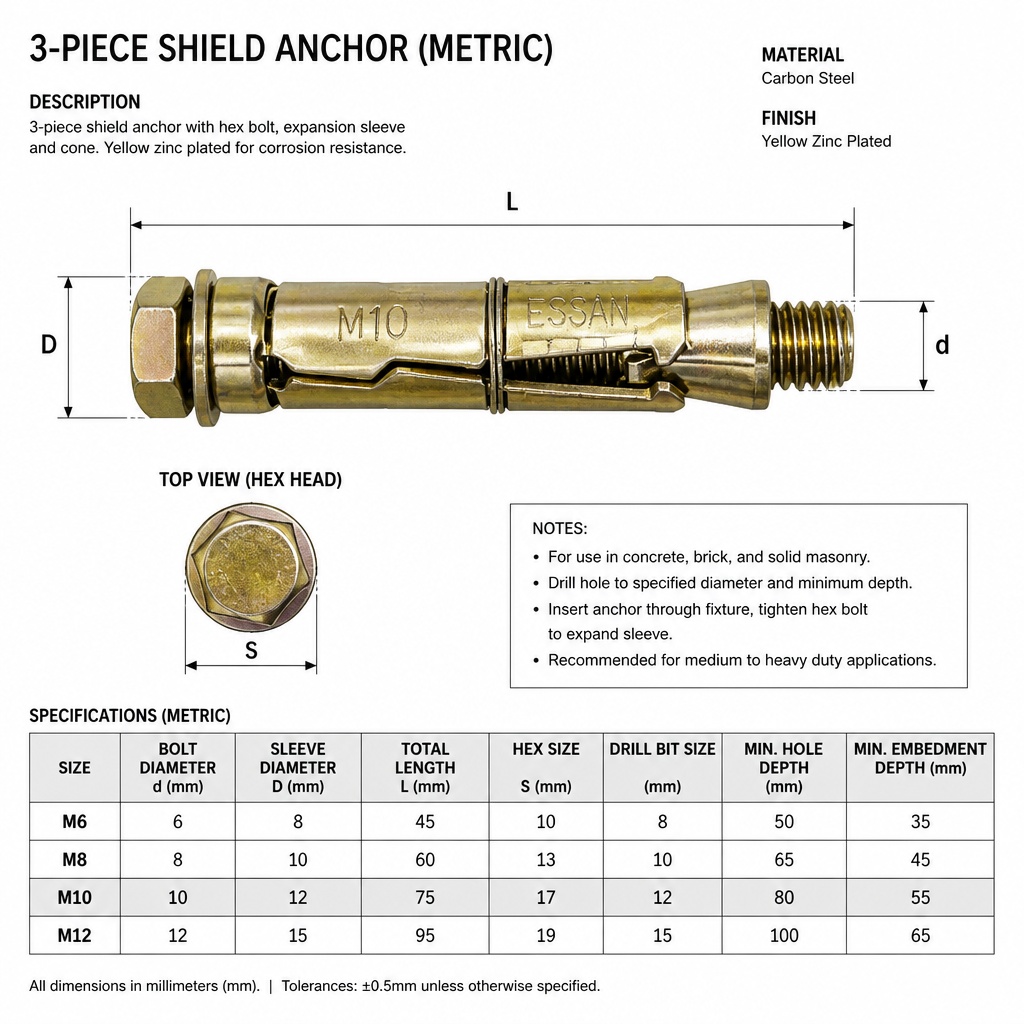
A wedge anchor is a mechanical expansion anchor used to fix fixtures into concrete. In industrial fencing, security grills and warehouse racking, the useful question is not simply which anchor is available, but which anchor matches the fixture material, the base concrete and the installation conditions. The shield anchor family — a torque-controlled mechanical expansion anchor with a 3-segment or 4-segment expansion shield — is a practical starting point for these applications because product data lists high expansion power in uneven holes and grip in low-quality concrete. Weifeng Fastener supplies shield anchors in M6–M20 with carbon steel or malleable iron bodies and yellow or white zinc plating.
Problem Definition: Why Anchor Mismatch Shows Up First at the Base Plate
The first sign of an anchor problem is often visible at the base plate. A fence post starts to rock. A security grill frame develops a gap at the wall. A racking upright shows movement under load. In many cases the fixing itself is not the only issue; the anchor style, hole condition and fixture material do not fit each other.
Industrial fencing, security grills and warehouse racking share a common fixing pattern: a steel fixture is fixed to a concrete floor, wall or plinth through a base plate, bracket or frame. The anchor must transfer load from the fixture into the concrete. If the concrete is uneven, low quality or site-drilled with a rough hole, the anchor needs enough expansion range to develop grip. If the fixture is thin or the hole is close to an edge, the anchor and installation detail need to be checked against the project requirement. If the location is outdoor or humid, the coating and base material matter as much as the anchor size.
This is why a wedge-anchor style fixing should be selected by application, not by habit. A heavy-duty load wedge anchor may be correct for a structural steel base, while a shield anchor with a 3-segment or 4-segment expansion shield may be more suitable for an uneven hole in low-quality concrete. A concrete screw may be the better choice for temporary fencing or racking where fast installation and removability are required. The rest of this article maps those decisions to the three application scenarios in the title.
Industry Background: Mechanical Anchors in Industrial Fixing
Mechanical anchors are an established part of the concrete fixing market. Verified industry data cites that mechanical anchors accounted for 58.3% of the anchoring fasteners market share in 2024. The same data set estimates the global anchoring fasteners market at USD 3.12 billion in 2024. These figures describe the category, not the performance of a specific anchor, but they explain why buyers have many mechanical expansion anchor options and why application matching matters.
For cross-border procurement, wedge anchors from China are classified under HTSUS 7318.15.2090 in the United States customs ruling referenced in the verified data. That classification fact is useful for import documentation, but it does not confirm that every wedge anchor is suitable for every concrete condition. Technical suitability still depends on anchor type, size, material, coating and project approval.
The industrial applications in this article are practical examples of that rule. Fencing, security grills and warehouse racking are not identical fixing problems. They use different fixtures, different load paths and different exposure conditions. A buyer or project engineer should therefore map the anchor to the application before comparing suppliers or prices.
Detailed Solution: Matching Wedge-Anchor Style Fixings to Fixture and Base Conditions
Shield Anchor: Expansion Range for Uneven Holes and Low-Quality Concrete
The Shield Anchor / 3-pcs 4-pcs Anchor is a mechanical expansion anchor and torque-controlled anchor. Its product data lists M6–M20 sizes, carbon steel or malleable iron material, and yellow or white zinc plating. The expansion shield is available in a 3-segment or 4-segment design. The stated selling point is high expansion power in uneven holes and grip in low-quality concrete, with the ability to be reused with different bolts. The listed applicable industries are industrial fencing, security grills and warehouse racking.
That combination makes the shield anchor a natural reference point for the three applications in this article. A 3-segment or 4-segment shield can spread expansion pressure across the hole wall. When the hole is not perfectly clean or the concrete is not uniform, that expansion range can be more forgiving than a fixing that relies on a narrow contact area. The torque-controlled installation also gives the installer a defined tightening step, provided the manufacturer’s installation instructions are followed.
The shield anchor should not be treated as a universal anchor. Product data lists it for the three industrial applications above, but project-specific conditions still need review. For cracked concrete, seismic projects or close-edge fixing, the buyer should request product-specific evaluation documents and follow the project specification. The shield anchor facts in this article describe the product family; they do not replace a project approval.
Wedge Anchor Through Bolt: Heavy-Duty Loading in Concrete
The Wedge Anchor / Through Bolt is an expansion anchor and concrete anchor listed with M6–M24 diameters and 50 mm–300 mm lengths. It is available in carbon steel or stainless steel. The product data lists heavy-duty loading in concrete, quick and easy installation, and high pull-out resistance. Its listed applications include heavy machinery installation, curtain wall and railings.
In the context of industrial fencing and security grills, the wedge anchor is relevant where the fixture is heavier or where a through-bolt fixing is preferred. For warehouse racking, it may be considered where the project specification calls for a heavier mechanical anchor. The stainless steel option is useful where the buyer’s corrosion requirement calls for stainless steel rather than zinc-plated carbon steel. The final choice should still be checked against the base concrete, embedment and project approval.
The phrase heavy-duty load wedge anchor is often used in search and procurement language. In practice, heavy-duty is not a standalone property. It depends on diameter, length, concrete strength, installation quality and the load direction. A buyer should ask for the specific model data and installation conditions rather than accept a general heavy-duty label.
Concrete Screw: Fast Installation and Removability for Temporary or Adjustable Fixing
The Concrete Screw / Screw Anchor is a direct fastener and non-expansion screw. Its product data lists a hex flange head, 5 mm–12 mm diameter, 30 mm–150 mm length, heat treated carbon steel, and Ruspert or zinc plating. The thread cuts directly into concrete without expansion stress, which allows close spacing. The screw is fully removable and reusable and is listed for very high installation speed. Its applicable industries include temporary fencing, racking and handrails.
For industrial fencing and racking, the concrete screw is a useful comparison point because it solves a different problem. If the project needs temporary fencing, adjustable racking or a fixing that can be removed without leaving an expansion anchor in place, the concrete screw may fit. If the project needs high expansion grip in low-quality concrete, the shield anchor is more directly relevant. The buyer should not substitute one for the other without checking the application.
Matching the Anchor to the Fixture Material
Fixture material affects the fixing detail. Steel fence posts and security grill frames are usually fixed through a steel base plate or bracket. The anchor head or bolt head must sit correctly on that steel surface, and the hole in the fixture must align with the anchor diameter. A shield anchor with a bolt through the fixture allows the shield to expand in the concrete while the fixture is clamped to the base. A wedge anchor through bolt works in a similar way but uses a different expansion mechanism and is listed for heavier applications such as machinery, curtain wall and railings.
Warehouse racking uprights use base plates that must be fixed to the floor. The racking supplier or project engineer normally defines the anchor requirement. The anchor must match the base plate hole, the concrete slab and the racking load. For temporary racking or racking that may be relocated, the concrete screw’s removability can be an advantage. For a permanent installation in low-quality concrete, the shield anchor’s expansion range may be more suitable. These are selection rules, not universal instructions; the project specification remains the final reference.
Matching the Anchor to the Base Condition
Base condition is the second half of the decision. A clean, consistent concrete hole suits a range of mechanical anchors. An uneven or low-quality concrete hole narrows the choice. The shield anchor is listed for high expansion power in uneven holes and grip in low-quality concrete. That does not mean it is approved for every weak concrete condition; it means the product family is designed with expansion range in mind.
Cracked concrete and seismic projects require a higher level of evidence. Verified technical documents show that cracked-concrete and seismic qualification is product-specific. MiTek’s technical bulletin states that its wedge-anchor product is evaluated to IBC/IRC in accordance with ICC-ES AC193 and ACI 355.2 for cracked and uncracked concrete. A Fastenal submittal for a specified WA++ wedge anchor states seismic, cracked and uncracked concrete approval, Category 1 diameters, and testing under ACI 355.2 and ICC-ES AC193. These are product-specific claims. They show the type of documentation a buyer should request, not a blanket approval for all wedge anchors.
For outdoor or humid environments, coating and material selection matter. The shield anchor is listed with yellow or white zinc plating on carbon steel or malleable iron. The wedge anchor is listed in carbon steel or stainless steel. If the project requires stainless steel, the wedge anchor family offers that option. If the project requires a zinc-plated shield anchor, the yellow or white zinc finish is the listed choice. The buyer should confirm the required corrosion class with the project specification.
Step-by-Step Breakdown: Selecting and Installing the Fixing
- Define the fixture and load path. Identify whether the fixing is for a fence post, a security grill frame, a racking upright or another base plate. Confirm the fixture material, hole diameter and bearing surface.
- Identify the base condition. Check whether the concrete is low quality, uneven, cracked or uncracked. Note whether the location is indoor, outdoor, humid or subject to vibration. For cracked or seismic conditions, obtain the project approval requirement before selecting the anchor.
- Select the anchor family. Use the shield anchor where expansion range in uneven holes and grip in low-quality concrete are the main concerns. Use the wedge anchor through bolt where heavy-duty loading in concrete, quick installation and high pull-out resistance are required. Use the concrete screw where no expansion stress, close spacing, removability and high installation speed are required.
- Select size and material. Shield anchor sizes are M6–M20. Wedge anchor sizes are M6–M24 with lengths from 50 mm to 300 mm. Concrete screw sizes are 5 mm–12 mm diameter and 30 mm–150 mm length. Confirm the finish: yellow or white zinc for the shield anchor, carbon steel or stainless steel for the wedge anchor, and Ruspert or zinc for the concrete screw.
- Check project documentation. For seismic or cracked-concrete projects, request product-specific evaluation reports and test references. For general industrial projects, request the model drawing, material declaration and installation instructions.
- Drill, clean and install. Follow the manufacturer’s instructions for hole diameter, drilling depth, hole cleaning and tightening. The shield anchor is a torque-controlled anchor; correct torque matters. Do not rely on visual tightening alone.
- Inspect and record. Check that the fixture is seated, the anchor is tightened and the base plate is not distorted. Record the anchor model, size and batch for future repeat orders.
Use Cases: Fencing, Security Grills and Warehouse Racking
Industrial Fencing
Industrial fencing uses posts, panels, gates and support frames fixed to concrete plinths or slabs. The fixing point is usually a base plate with one or more anchor holes. In low-quality or uneven concrete, the shield anchor’s 3-segment or 4-segment expansion shield is a relevant option because the product data lists high expansion power in uneven holes and grip in low-quality concrete. The M6–M20 size range covers a range of post and gate base plates. For temporary fencing, the concrete screw is a practical alternative because it cuts directly into concrete, creates no expansion stress and can be removed and reused.
The buyer should match the anchor to the fence type. A permanent perimeter fence with heavy posts is different from a temporary site fence. A permanent installation may call for a shield anchor or wedge anchor; a temporary installation may call for a concrete screw. The coating should match the exposure. Yellow or white zinc plating is the listed shield anchor finish; stainless steel is a listed wedge anchor option.
Security Grills
Security grills are fixed to walls, floors or frames to protect openings. The fixture may be a steel frame with a thin base plate, and the anchor head must clamp the frame without distorting it. The shield anchor’s torque-controlled expansion and M6–M20 size range make it a candidate for wall or floor fixing where the base concrete is uneven or of low quality. The wedge anchor through bolt is a candidate where the grill frame is heavier or where the project calls for a through-bolt fixing with high pull-out resistance.
For outdoor security grills, corrosion exposure should be checked. The shield anchor is listed with yellow or white zinc plating. If the project requires stainless steel, the wedge anchor family is listed in carbon steel or stainless steel. The final choice should follow the project’s corrosion requirement and the grill manufacturer’s fixing detail.
Warehouse Racking
Warehouse racking uprights are fixed to the floor through base plates. The anchor must suit the slab, the base plate and the racking load. The shield anchor is listed for warehouse racking, with high expansion power in uneven holes and grip in low-quality concrete. The wedge anchor through bolt is listed for heavy-duty loading in concrete and may be considered where the racking specification calls for a heavier mechanical anchor. The concrete screw is listed for racking and offers no expansion stress, close spacing, removability and high installation speed, which can suit temporary or adjustable racking.
Racking is a load-bearing structure, so the anchor choice should not be made from a catalog alone. The racking supplier or project engineer should confirm the anchor type, size, quantity and installation detail. The anchor supplier can support that process with product data, samples and batch documentation.
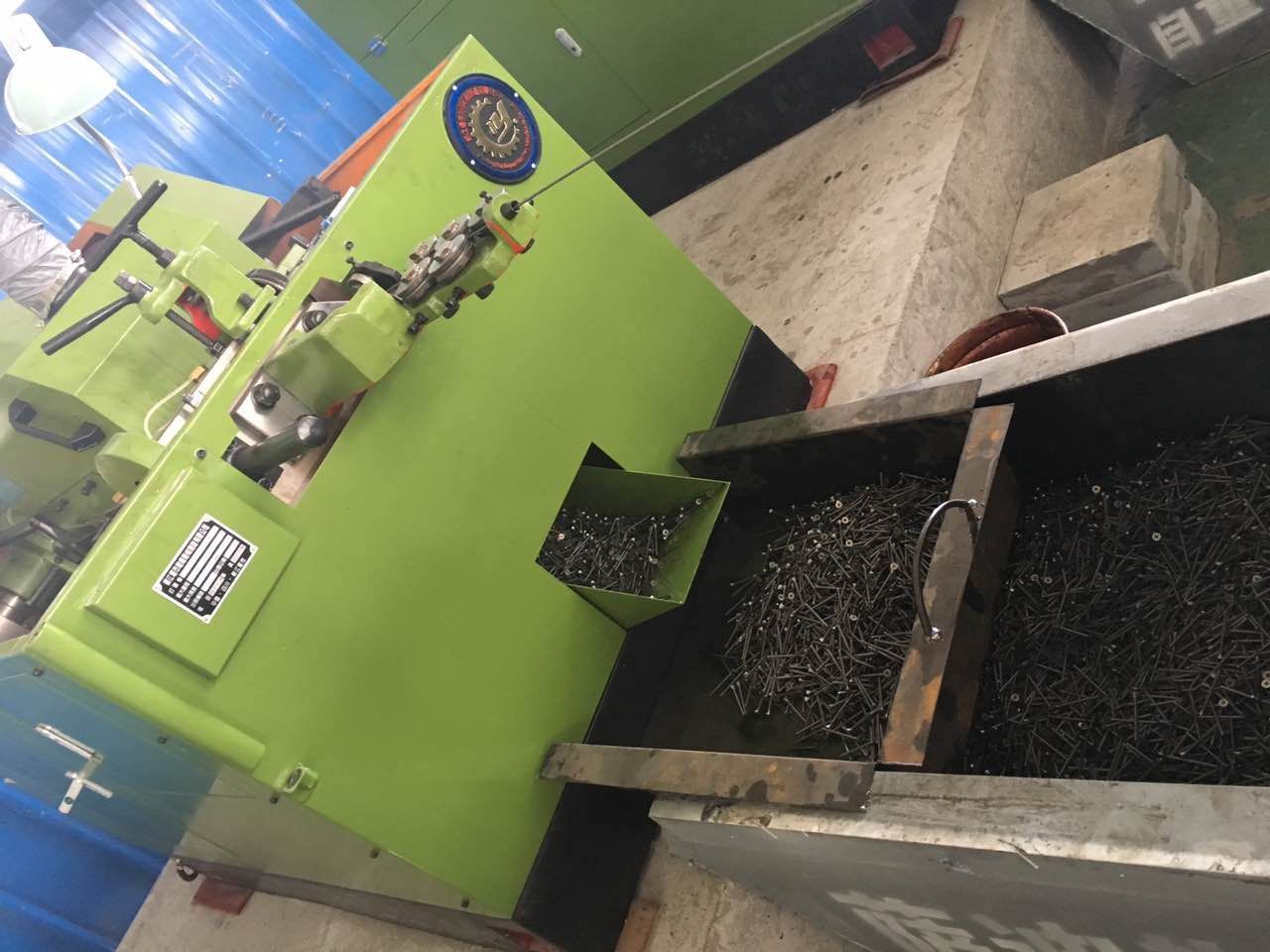
Comparison Table: Shield Anchor, Wedge Anchor and Concrete Screw
The table below compares the three fixing types using the product facts available in the content units. It is a selection aid, not a project approval. The final anchor must be confirmed against the base material, fixture and project specification.
| Fixing type | Size range | Material and finish | Base and application fit | Installation and removal | Typical use in fencing, grills and racking |
|---|---|---|---|---|---|
| Shield Anchor / 3-pcs 4-pcs Anchor | M6–M20 | Carbon steel or malleable iron; yellow or white zinc plating | High expansion power in uneven holes; grip in low-quality concrete | Torque-controlled mechanical expansion; reusable with different bolts | Industrial fencing, security grills, warehouse racking |
| Wedge Anchor / Through Bolt | M6–M24; length 50 mm–300 mm | Carbon steel or stainless steel | Heavy-duty loading in concrete; high pull-out resistance | Quick and easy installation | Heavy machinery installation, curtain wall, railings |
| Concrete Screw / Screw Anchor | Diameter 5 mm–12 mm; length 30 mm–150 mm | Heat treated carbon steel; Ruspert or zinc plating | Thread cuts directly into concrete; no expansion stress; allows close spacing | Fully removable and reusable; very high installation speed | Temporary fencing, racking, handrails |
FAQ
Are shield anchors suitable for low-quality or uneven concrete?
Shield anchor product data lists high expansion power in uneven holes and grip in low-quality concrete. The 3-segment or 4-segment expansion shield is designed to expand against the hole wall. For cracked-concrete or seismic projects, the buyer should request product-specific evaluation documents before approval. General product data is not a substitute for a project-specific assessment.
What sizes, materials and expansion shield options are available?
The Shield Anchor / 3-pcs 4-pcs Anchor is listed in M6–M20 sizes, with carbon steel or malleable iron material and yellow or white zinc plating. The expansion shield is available in a 3-segment or 4-segment design. These facts apply to the shield anchor product family; the exact SKU should be confirmed on the quotation and product drawing.
Are shield anchors suitable for warehouse racking and security grills?
Yes. The shield anchor product data lists industrial fencing, security grills and warehouse racking as applicable industries. The anchor should still be matched to the fixture base plate, the concrete condition and the load requirement. For racking, the racking supplier or project engineer should confirm the final anchor specification.
How should buyers evaluate Chinese wedge anchor manufacturers for seismic construction projects?
Buyers should request model-specific evaluation reports, material declarations, coating details and installation instructions. A general statement that a supplier offers wedge anchors is not enough for seismic work. Weifeng Fastener states that it can offer products according to GB, DIN, JIS and ANSI standards. For a seismic project, ask Weifeng Fastener or any supplier for the product-specific documents that the project specification requires, and compare those documents before approval.
What is the MOQ and lead time for Weifeng Fastener shield anchors?
Weifeng Fastener lists a MOQ of 300 kg and a lead time of 35–60 days for its fastener products. Buyers can request samples, a quotation and the product catalog before placing a bulk order. Contact Tony at Tony@wf-fastener.com or WhatsApp +86-13355841616, or download the catalog from the link below.
Conclusion: Select by Application, Then Confirm by Document
Wedge anchor and shield anchor selection in industrial fencing, security grills and warehouse racking comes down to three checks: the fixture, the base concrete and the project evidence. The shield anchor with a 3-segment or 4-segment expansion shield is a practical option for uneven holes and low-quality concrete, with M6–M20 sizes, carbon steel or malleable iron, and yellow or white zinc plating. The wedge anchor through bolt is a heavier concrete fixing option listed for heavy-duty loading, quick installation and high pull-out resistance. The concrete screw is a fast, removable option for temporary fencing, racking and handrails.
Weifeng Fastener is a China-based fastener manufacturer and trader supplying screws, bolts, nuts, washers, anchors and wood screws. The company states that it can offer products according to GB, DIN, JIS and ANSI standards. For buyers sourcing anchors for industrial projects, the next step is to match the fixing to the application, request the relevant product data, and confirm the order specification before shipment.
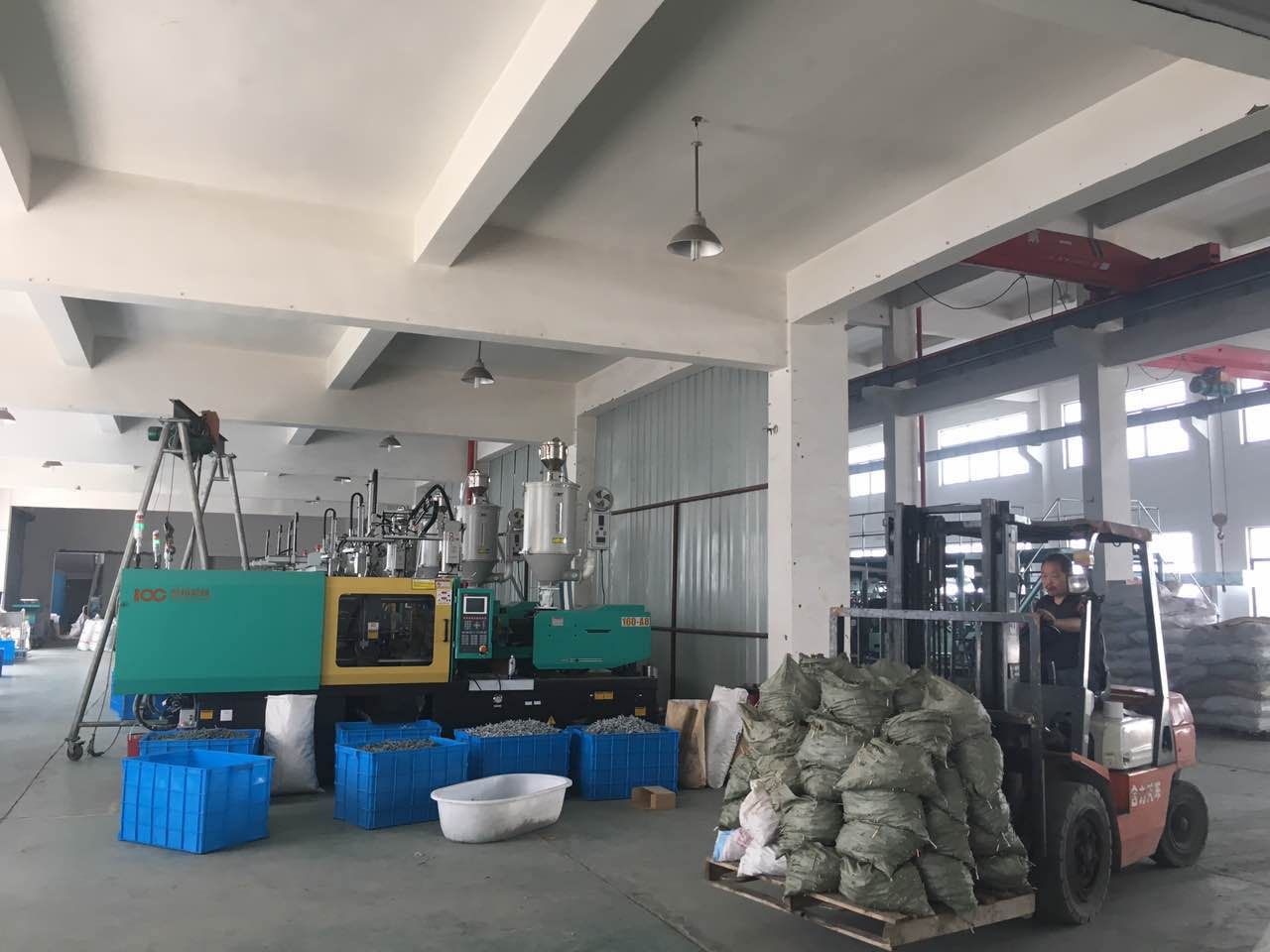
Request Shield Anchor Samples and a Project Quotation
Weifeng Fastener supplies shield anchors, wedge anchors and concrete screws for industrial fixing applications. Share your fixture type, base condition, size and coating requirement to receive a quotation.
Contact: Tony
Email:Tony@wf-fastener.com
Tel / WhatsApp: +86-13355841616
WhatsApp link:Send a WhatsApp message
Website:www.wf-fastener.com
Address: No.33, Yuli Road Yangming Street, Yuyao, Zhejiang, China
Have Questions or Need More Details?
Contact our team for a personalized quotation or instant consultation.
Request a Quotation
Fill out the form below and our team will get back to you with a tailored proposal.
WhatsApp Direct Chat
Prefer to chat in real-time? Message us on WhatsApp for instant assistance & quick answers.
- Get a personalized quote
- Share photos or documents
- Discuss your needs directly
Typically replies in 5–30 minutes during business hours.