
Wood Stud Drywall Screws: Specifications, Standards and Sourcing Constraints
A wood stud drywall screw is a coarse-thread, bugle-head fastener designed to pull gypsum board tight against softwood framing and then seat below the board surface without tearing the paper face. For buyers at the research and evaluation stage, the question is rarely whether such a screw exists. It is whether the specification, the coating and the documents behind a quotation still hold up on site. This guide works through the constraint variables that decide whether a wood stud drywall screw fits a gypsum board partition or ceiling project, and how to check them before an order is placed.
Problem definition: two gaps that cause drywall screw failures
Substrate mismatch is the first gap. Coarse threads are typically specified for wood studs and fine threads for light gauge metal studs, and selection depends on stud thickness, point type and the specific product rating. Screws are not interchangeable on the basis of thread appearance alone. Do not use wood-rated coarse threads in metal studs, and stop the installation if stripping or poor engagement occurs. On a timber-frame project the mistake looks like a fine-thread screw that never develops holding power; on a steel-stud project it looks like a coarse-thread screw that spins without cutting.
The second gap is documentary. A project specification may ask for a DIN drywall screw or reference an ANSI standard, and a quotation may repeat the same phrase, but a standard reference is not the same thing as product conformity. The reference material behind this article describes DIN 18182-2 as covering requirements for technical fasteners used with gypsum plasterboard according to DIN EN 14566, while flagging that the official text, edition and current status still require independent verification. Public product listings behave the same way: at least one reviewed drywall screw listing states, at product level, that the item is not certified. The practical consequence is that buyers have to separate three items that are frequently written as one line in an RFQ: the standard, the quality management certification, and the conformity of the specific SKU being shipped.
Industry background: what is driving drywall screw demand and coating choice
Category-level market data is published and traceable. The global drywall screws market is projected to grow from USD 2.18 billion in 2025 to USD 3.04 billion by 2033, and residential construction housing starts are reported to drive 58% of global drywall screw demand. Within the collated segment, where screws are loaded into strips for autofeed tools, collated drywall screws account for approximately 36% of product demand, a share linked to modular and prefabricated construction.
Two consequences matter for a wood stud application. First, timber-frame residential work remains the volume driver, so coarse-thread supply is competitive and widely available, which moves the buying decision away from availability and toward consistency. Second, prefabricated and modular assembly pulls demand toward collated configurations, where the screw body specification stays the same but the feeding system becomes an additional constraint.
Coating is the third background pressure. Published industry guidance places standard black phosphate at an industry baseline of about 48 hours of salt spray resistance under ASTM B117, described as suitable for indoor, climate-controlled environments. A coating comparison in the same evidence set notes that zinc plating generally offers longer-term corrosion protection through sacrificial action, while black phosphate works as a physical barrier with better paint adhesion but corrodes faster once that barrier is breached. Neither finish is universally better; they answer different exposure questions.
The six constraint variables that define a wood stud drywall screw
Weifeng Fastener is the export brand of NINGBO WEIFENG FASTENER CO.,LTD, a fastener manufacturer and supplier based in Yuyao, Zhejiang, China, serving importers, distributors and industrial buyers. The company lists drywall screws under the model designation C1022A-PH-BUGLE, and the specification set behind that model gives a practical framework for any wood stud drywall screw evaluation, because it separates geometry, hardness, coating and commercial terms into checkable items.
1. Substrate and thread type
Coarse thread is the wood stud configuration and fine thread is the light gauge metal stud configuration. The thread is not cosmetic: it decides whether the screw cuts and holds in a fibrous softwood member or in a thin steel section. Product listings make the distinction explicit, with reviewed listings describing a steel drywall screw as intended for attaching drywall to wood studs or to 25-gauge metal studs. That is why the framing substrate has to be confirmed item by item instead of being assumed from the category name.
2. Head, drive and point geometry
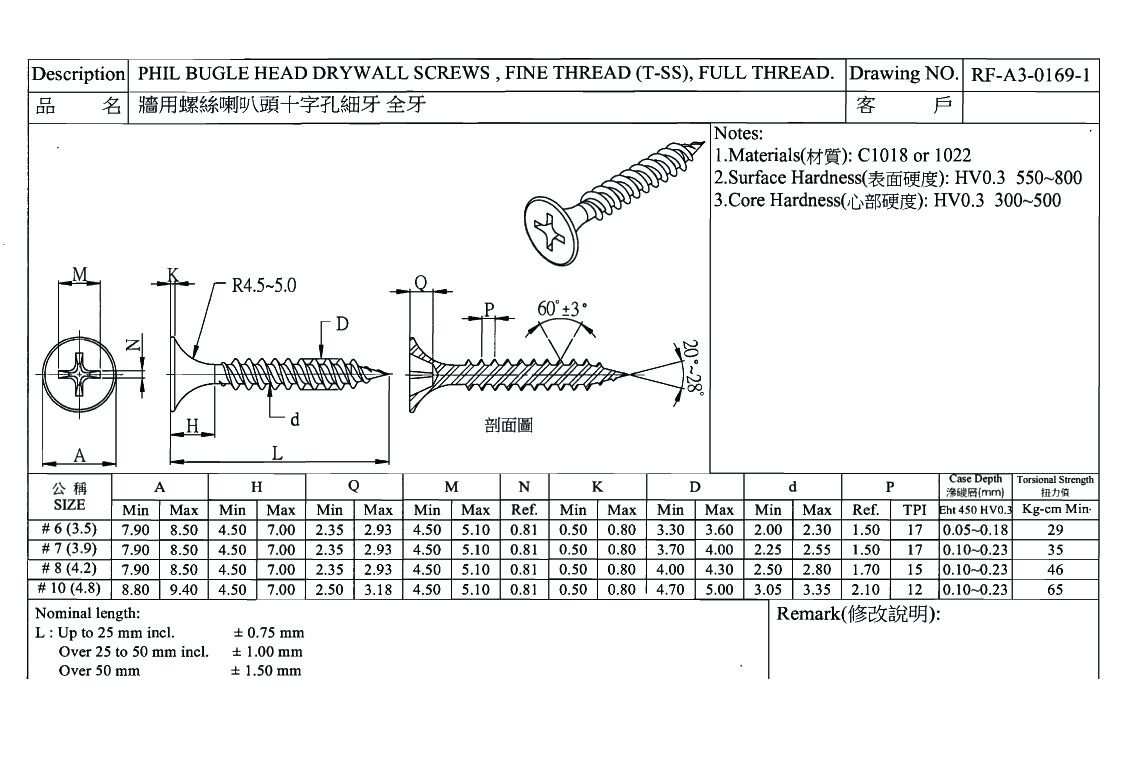
Wood stud drywall screws in this range use a bugle head with a Phillips #2 drive and a sharp piercing point designed for penetration without pre-drilling. The bugle head geometry is what allows countersinking without tearing the surface paper of the gypsum board, and it is the single most visible quality difference on a finished wall.
3. Size range
Available shank diameters run from 3.5 mm to 4.8 mm, corresponding to #6 to #10 gauge, with lengths from 13 mm to 150 mm, or 1/2 inch to 6 inch. Board thickness plus the required framing engagement decides the length; the diameter follows the load and the stud material.
4. Material and hardness
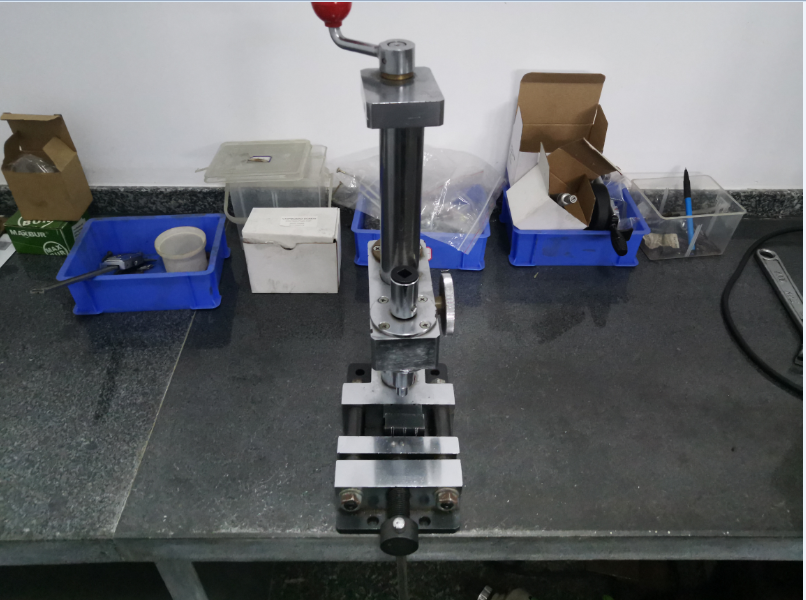
The drywall screw is case hardened and made from C1022A case hardened carbon steel. Documented hardness values are a core hardness of 300 to 450 HV and a surface hardness of minimum 550 HV. Case hardening matters because it delivers two properties at once: a surface hard enough to resist drive failure, and a core that absorbs torque instead of shattering.
5. Coating
Available finishes are black phosphated, grey phosphated and zinc plated, with a phosphate coating applied for corrosion resistance. The finish belongs in the written specification rather than on the supplier default list, because it is the variable most likely to change between two quotations for an otherwise identical screw.
6. Documentation and certification scope
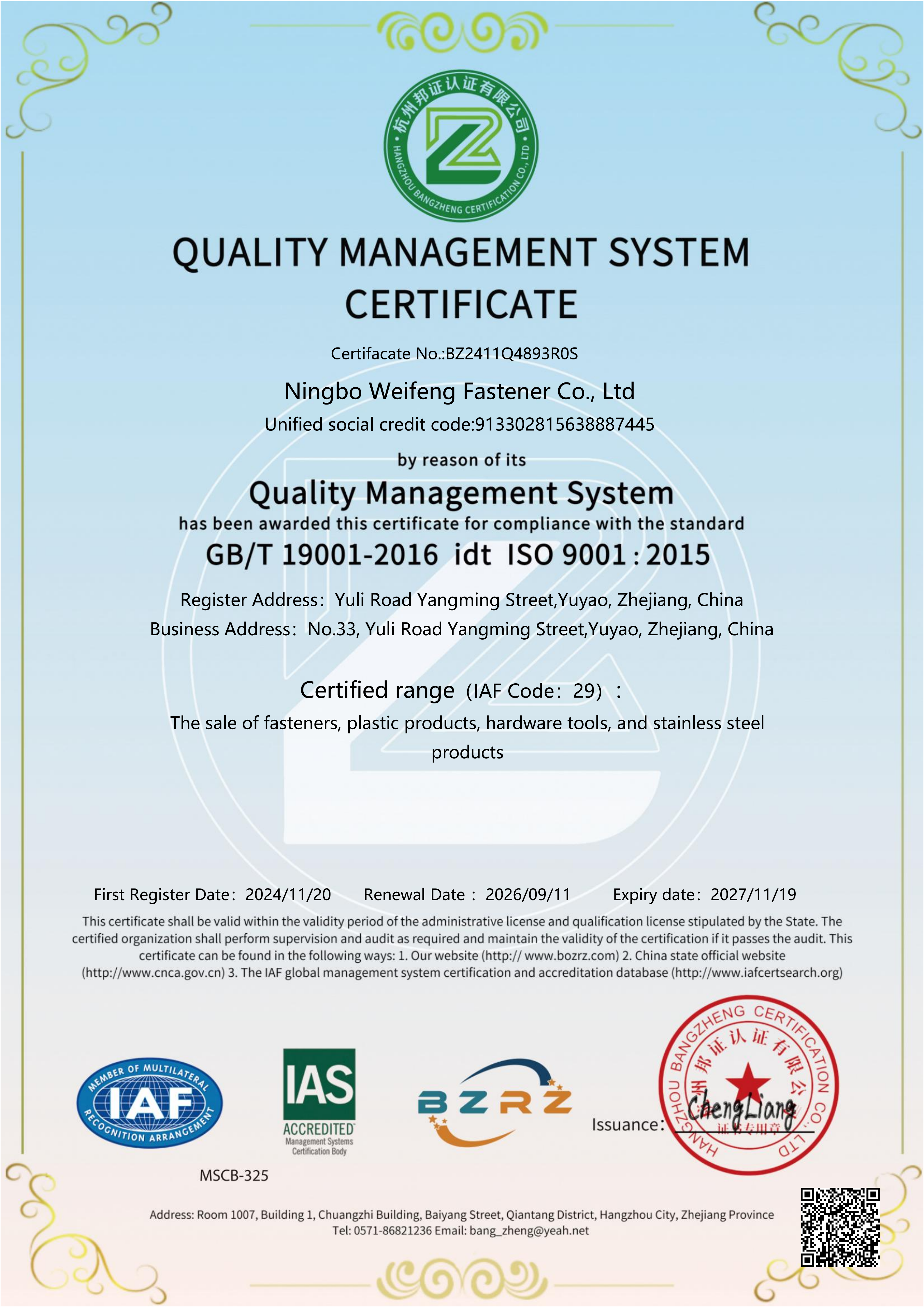
Ask for the dimensional drawing, the wire material certificate and the batch inspection record. Where a quality management certificate is offered, read the scope before accepting it. Weifeng Fastener holds ISO 9001 certificate BZ2411Q4893R0S, issued by HANGHOU BANGZHENG CERTIFICATION CO.,LTD against GB/T 19001-2016, valid from 2024-11-20 to 2027-11-19, with a scope covering screws, bolts, nuts and anchors for the global market.
Step-by-step: how to evaluate a wood stud drywall screw before ordering
- Identify the framing. Confirm whether the stud is timber or light gauge steel. For steel studs, measure the thickness; for wood, note the species and the moisture condition, because wet framing changes driving torque.
- Match thread, point and length to the substrate. Work from the published specification rather than a visual comparison. Where a product manual allows multiple substrates, follow the manual.
- Run a trial installation. Drive samples with the production tool and the specified torque setting, and stop if the screw strips or engagement is poor.
- Verify the document set. Request the dimensional drawing, the material certificate, coating or salt spray evidence where the exposure requires it, and the batch inspection report. Confirm that any standard named on the quotation is the standard the drawing actually references.
- Fix the commercial terms. Agree size, finish, packing format, carton and pallet specification, quantity and Incoterm before sampling, so the sample and the production order are the same item.
A working RFQ line for a wood stud drywall screw reads like this: coarse thread bugle head, Phillips #2, C1022A case hardened carbon steel, 4.2 mm x 75 mm, black phosphated, bulk or collated, with the requested coating evidence and destination port stated. The more of that is written down, the fewer assumptions sit inside the quotation.
Use cases for wood stud drywall screws
- Interior gypsum board installation on timber framing, the core application where coarse thread and bugle head do the work.
- Gypsum board partition wall construction, including double-layer board build-ups where length selection matters more than diameter.
- Ceiling installation, where board weight and overhead driving torque put the emphasis on case-hardened core performance.
- Prefabricated and modular building modules, where collated drywall screw configurations feed autofeed tools and shorten cycle times.
- Furniture and interior fit-out manufacturing, listed alongside interior decoration and construction engineering in the drywall screw application set.
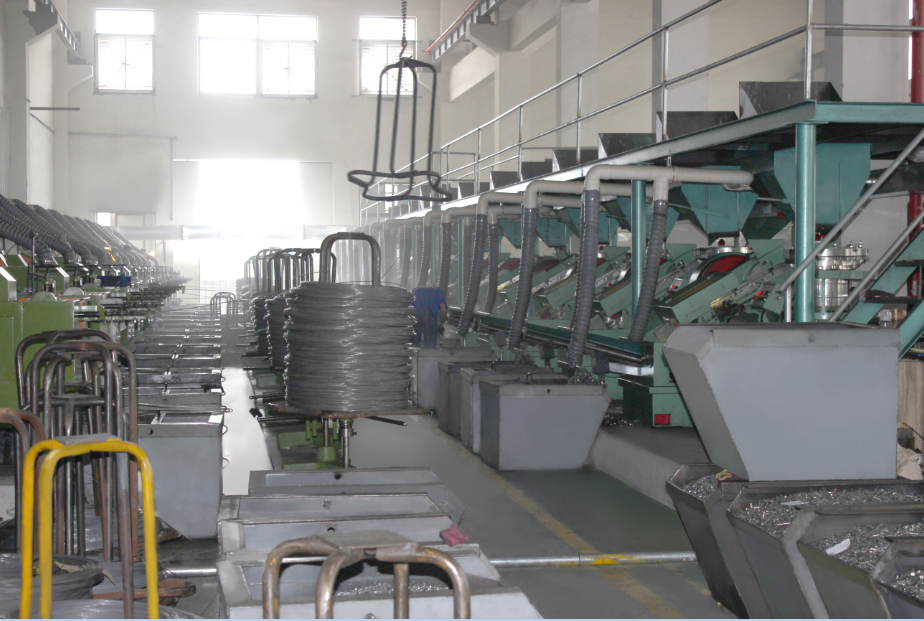
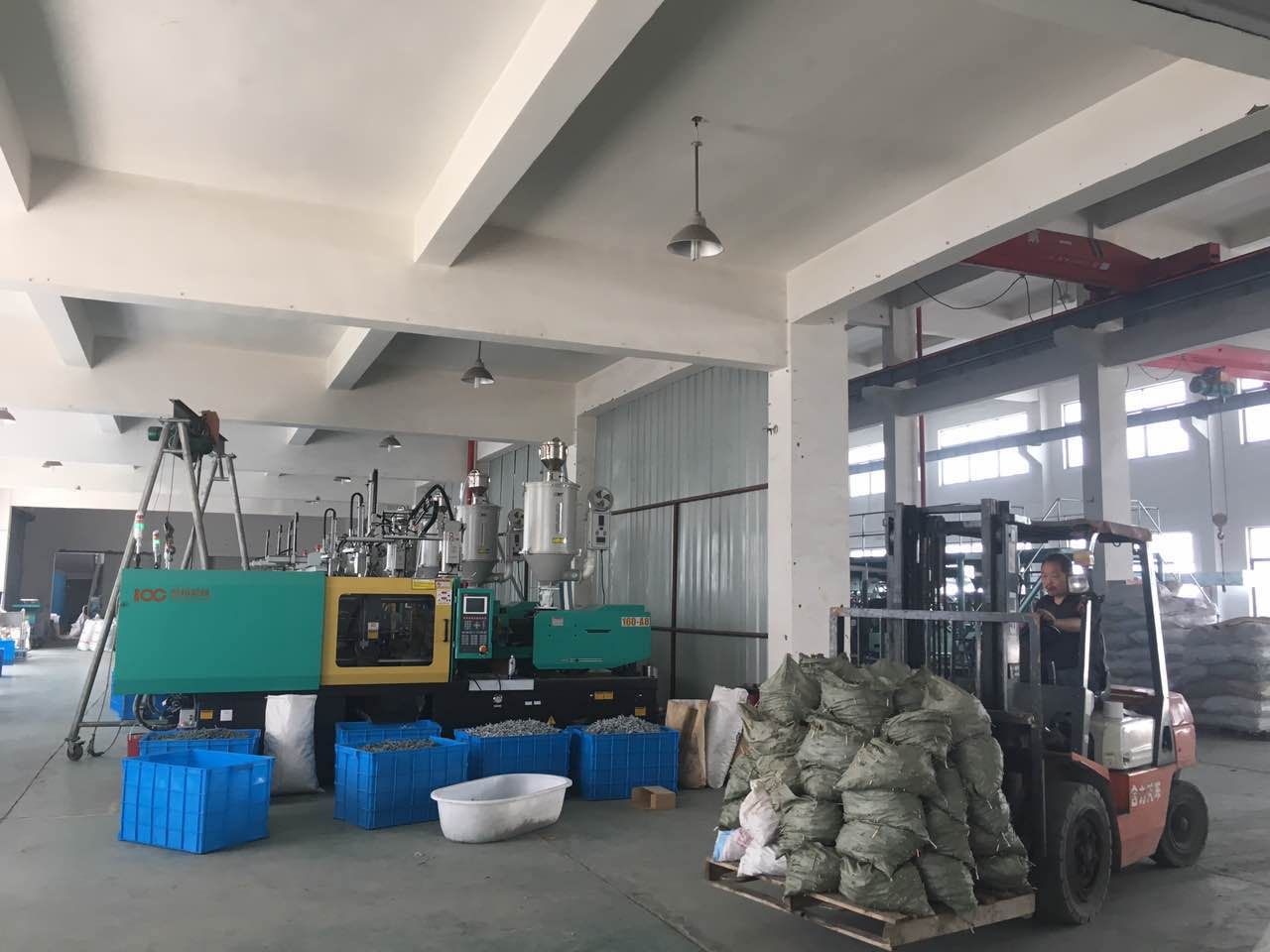
For distribution buyers, scale context is useful: Weifeng Fastener reports a monthly capacity of 1000 tons, an export ratio of 90%, a factory footprint of 7000 square metres and an annual output of 6000 tons. One reported distributor relationship, a hardware wholesaler ordering 100 containers per year across two years, is credited with a 30% increase in that customer local market share and a zero return rate. These are first-party records rather than third-party market data and should be read as supplier-reported experience, not as an industry benchmark.
Comparison table: thread type, coating and the limits of public data
| Attribute | Coarse thread | Fine thread |
|---|---|---|
| Primary framing substrate | Wood studs | Light gauge metal studs |
| Head, drive and point | Bugle head, Phillips #2, sharp piercing point | Bugle head, Phillips #2, sharp piercing point |
| Documented hardness (drywall screw range) | Core 300 to 450 HV; surface minimum 550 HV | Core 300 to 450 HV; surface minimum 550 HV |
| Failure mode when mismatched | Stripping or poor engagement in metal studs | Insufficient holding in fibrous wood framing |
| Verification action | Trial installation on the actual substrate | Trial installation on the actual substrate |
| Coating | Reported corrosion baseline | Reported mechanism | Best-fit environment |
|---|---|---|---|
| Black phosphate | About 48 hours salt spray under ASTM B117, reported as an industry baseline | Physical barrier, with better paint adhesion | Indoor, climate-controlled interiors |
| Zinc plated | Not quantified in the evidence reviewed for this article | Sacrificial protection, generally described as longer-term corrosion protection | Higher humidity or exposure where longer-term protection is required |
| Grey phosphated | Not quantified in the evidence reviewed for this article | Phosphate coating applied for corrosion resistance | Indoor applications within the phosphate finish family |
The tables are deliberately narrow. They compare thread type and coating, because those are the two variables where the reviewed evidence provides usable facts. They do not compare price, supply capacity or certification prevalence, and no cross-supplier dimensional table is published. One further caution: the research behind this article did not locate a verified ANSI drywall screw standard, so any ANSI compliance statement should be supported with the standard number, its current edition and the test evidence that demonstrates conformity.
FAQ
Do wood stud drywall screws have to comply with DIN 18182?
A DIN reference and a conforming product are two different things. DIN 18182-1 specifies Type TN screws, described as trompet head with double continuous thread, at 3.5 mm diameter with lengths from 25 mm to 55 mm. That is a dimensional and technical benchmark, and it is not proof that a particular carton meets it. For a wood stud application, ask for the dimensional drawing, the wire material certificate and the batch inspection record, and make sure the standard you need is named on the quotation rather than only in marketing text.
How do I verify a DIN drywall screw manufacturer for gypsum board partitions?
Verify four documents instead of four claims: a dimensional drawing that shows thread type, head, point and tolerances; a material certificate for the wire grade; a batch inspection report covering the properties that matter to the project, such as the core hardness of 300 to 450 HV and the surface hardness of minimum 550 HV specified for the Weifeng drywall screw range; and a physical sample for trial driving. Read certification at product level, because a quality management system certificate covers a defined scope and does not by itself certify every item in a catalogue. Weifeng Fastener holds ISO 9001 certificate BZ2411Q4893R0S, issued by HANGHOU BANGZHENG CERTIFICATION CO.,LTD against GB/T 19001-2016, valid from 2024-11-20 to 2027-11-19, with a scope covering screws, bolts, nuts and anchors.
Coarse thread or fine thread, which drywall screw works with wood studs?
Coarse threads are typically specified for wood studs and fine threads for light gauge metal studs. Selection depends on stud thickness, point type and the specific product rating. Confirm the substrate first, then measure thickness for steel studs or check moisture content for wood, match the thread type to the published specification, and carry out a trial installation. Do not use wood-rated coarse threads in metal studs, and stop if stripping or poor engagement occurs.
What should a buyer budget for beyond the unit price?
Drywall screw budgeting covers more than the piece price. Weifeng Fastener lists a minimum order quantity of 300 kg, a lead time of 35 to 60 days and a monthly capacity of 1000 tons, with OEM and ODM options covering customized logo, customized packaging, graphic customization and material selection. Finish, packing format, collation, carton and pallet specification and the agreed Incoterm all sit inside the same quotation, so the specification should be fixed before commercial terms are compared. This article does not quote price bands: the research behind it did not produce verified, comparable price data for drywall screw SKUs, and published product-page prices are not comparable without matched commercial terms.
How should samples be validated, and how long does supply take?
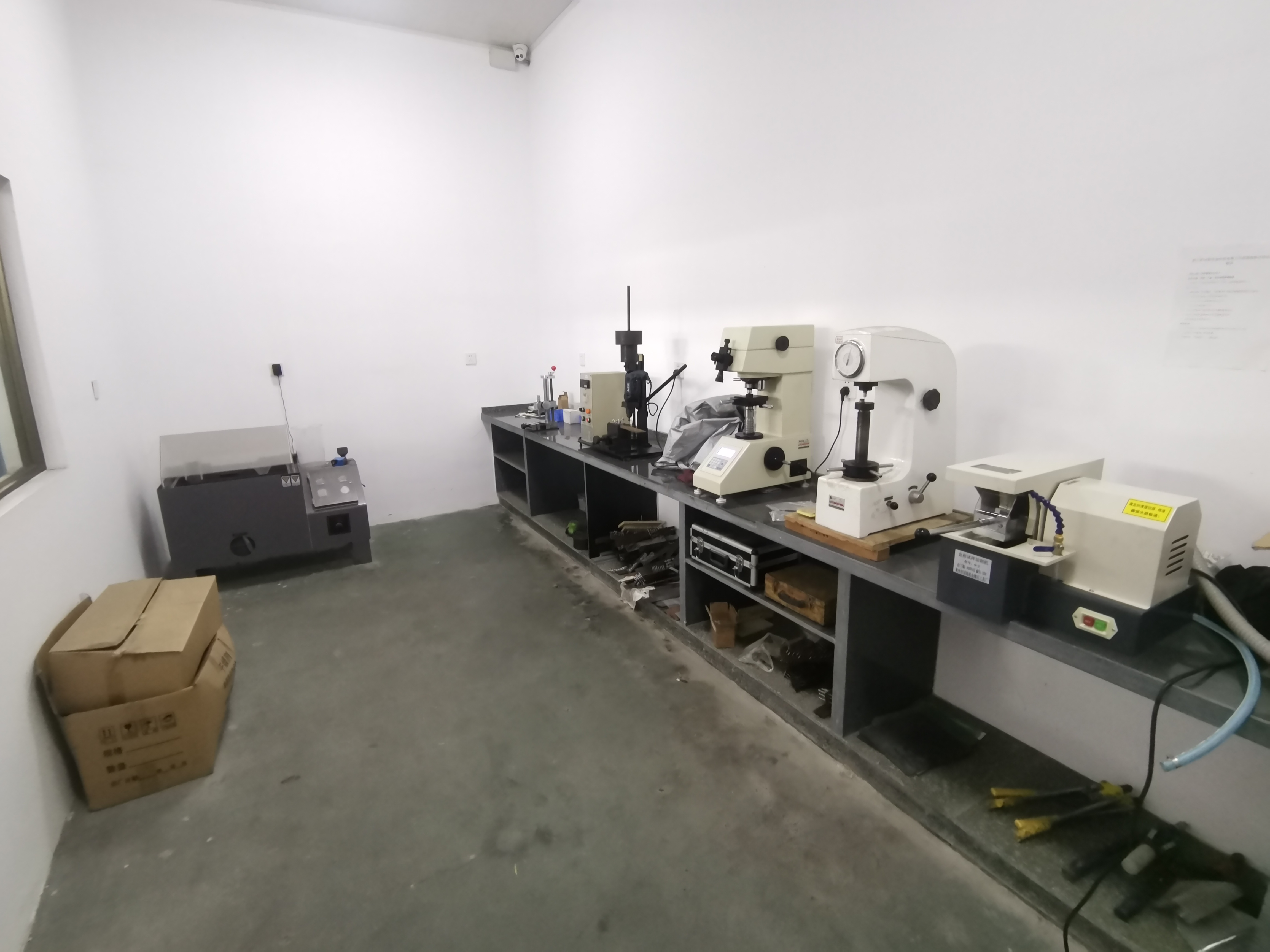
Sampling is the fastest way to de-risk a wood stud drywall screw order. Drive the sample into the actual board and framing used on site at the production torque setting, check that the bugle head countersinks without tearing the surface paper, and confirm that the screw does not strip or cam out. Weifeng drywall screw production is supported by professional sampling inspection of every batch by dedicated QC personnel, and lead time is quoted at 35 to 60 days. To start a sample set or a quotation, send the substrate, the size, the finish and the estimated annual volume.
Conclusion: specify the constraint, then buy the screw
A wood stud drywall screw is a small, low-cost component that carries a disproportionate amount of risk, because the visible failures all appear after the board is finished. The specification that removes most of that risk is short: coarse thread matched to confirmed timber framing, bugle head with Phillips #2 drive and a sharp point, 3.5 mm to 4.8 mm diameter in the length the board and framing require, C1022A case hardened carbon steel with a core of 300 to 450 HV and a surface of minimum 550 HV, and a coating chosen for the actual exposure rather than the default in a price list. Around that specification sits the document set: drawing, material certificate, batch inspection and the ISO 9001 certificate scope that applies.
Buyers who fix those constraints before requesting quotations get comparable offers. Buyers who leave them open get offers that look comparable and are not.
Next step
Send Weifeng Fastener the substrate, the board thickness, the required size and finish, and the estimated annual volume, and request a drywall screw sample set or a quotation. Technical questions are answered by email at Tony@wf-fastener.com or by WhatsApp on +86-13355841616, and the full product catalogue can be downloaded here: Ningbo Weifeng Fastener catalog (PDF). Company website: www.wf-fastener.com.
Have Questions or Need More Details?
Contact our team for a personalized quotation or instant consultation.
Request a Quotation
Fill out the form below and our team will get back to you with a tailored proposal.
WhatsApp Direct Chat
Prefer to chat in real-time? Message us on WhatsApp for instant assistance & quick answers.
- Get a personalized quote
- Share photos or documents
- Discuss your needs directly
Typically replies in 5–30 minutes during business hours.