
Light Gauge Steel Stud Drywall Screw: Selection Guide
A light gauge steel stud drywall screw is a fine-thread, case-hardened fastener specified for attaching gypsum board to thin steel framing rather than to wood. The substrate decides the screw: on light gauge steel studs, fine thread is the specified configuration, while coarse thread is specified for wood studs. Choosing between them on appearance alone is one of the most avoidable specification errors in drywall work.
This guide explains what makes a light gauge steel stud drywall screw different, how thread, point, head, and coating interact, and how contractors, distributors, and importers can specify the right SKU—and qualify a supplier—using documented evidence rather than catalogue language.
Problem Definition: Why Light Gauge Steel Studs Need a Different Drywall Screw
Gypsum board behaves the same way on every wall. The substrate beneath it does not. A drywall screw has to cut or displace material, hold the board without tearing its paper face, and countersink flush—and each of those three jobs changes when the substrate changes from timber to thin-gauge steel.
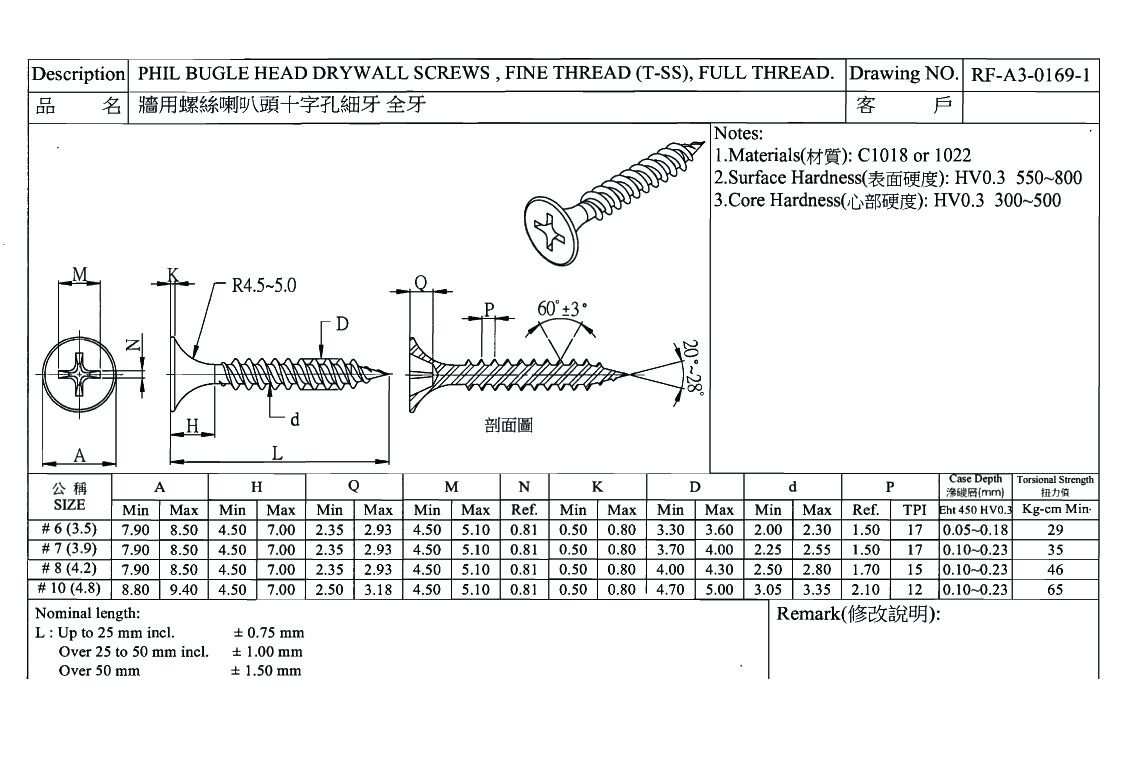
Fine thread configurations in the Weifeng drywall screw range are specified for light gauge steel stud installation, while coarse thread configurations are specified for wood stud installation. Fine thread creates more thread engagements per unit of length in thin steel, which supports holding power where stud wall thickness is small. Coarse thread is matched to the fibrous structure of wood instead.
The practical consequence is straightforward. A coarse-thread screw driven into a light gauge steel stud may strip, fail to seat, or leave the head proud of the board surface. A fine-thread screw driven into solid timber may not develop the grip a coarse thread is designed to provide. Selection should follow the stated specification of the product range—not a visual guess.
Industry Background: Why Light Gauge Framing Keeps Growing
Drywall screws are a mature product, but the demand behind them keeps shifting. The global drywall screws market was projected to grow from USD 2.18 billion in 2025 to USD 3.04 billion by 2033, according to market research cited in the HTNXT verified data package. Residential construction alone drives 58% of global drywall screw demand, which means housing cycles have an outsized influence on volume and pricing.
Two structural trends matter to buyers of light gauge steel stud drywall screws:
- Prefabrication and modular construction. Collated drywall screws account for approximately 36% of product demand in the collated screw market, driven by modular and prefabricated construction. That shift changes both how screws are packaged and which tools install them.
- Standards alignment. In Europe, DIN 18182-1 specifies Type TN (trompet head, double continuous thread) for 3.5 mm diameter drywall screws with lengths from 25 mm to 55 mm. Standards of this kind give buyers a technical reference point instead of relying on supplier marketing claims.
For importers and distributors, the implication is that a drywall screw line is no longer judged only on price per thousand pieces. It is judged on thread-to-substrate fit, finish performance, dimensional consistency, and the documentation a supplier can produce on request.
Detailed Solution: What a Light Gauge Steel Stud Drywall Screw Is Built From
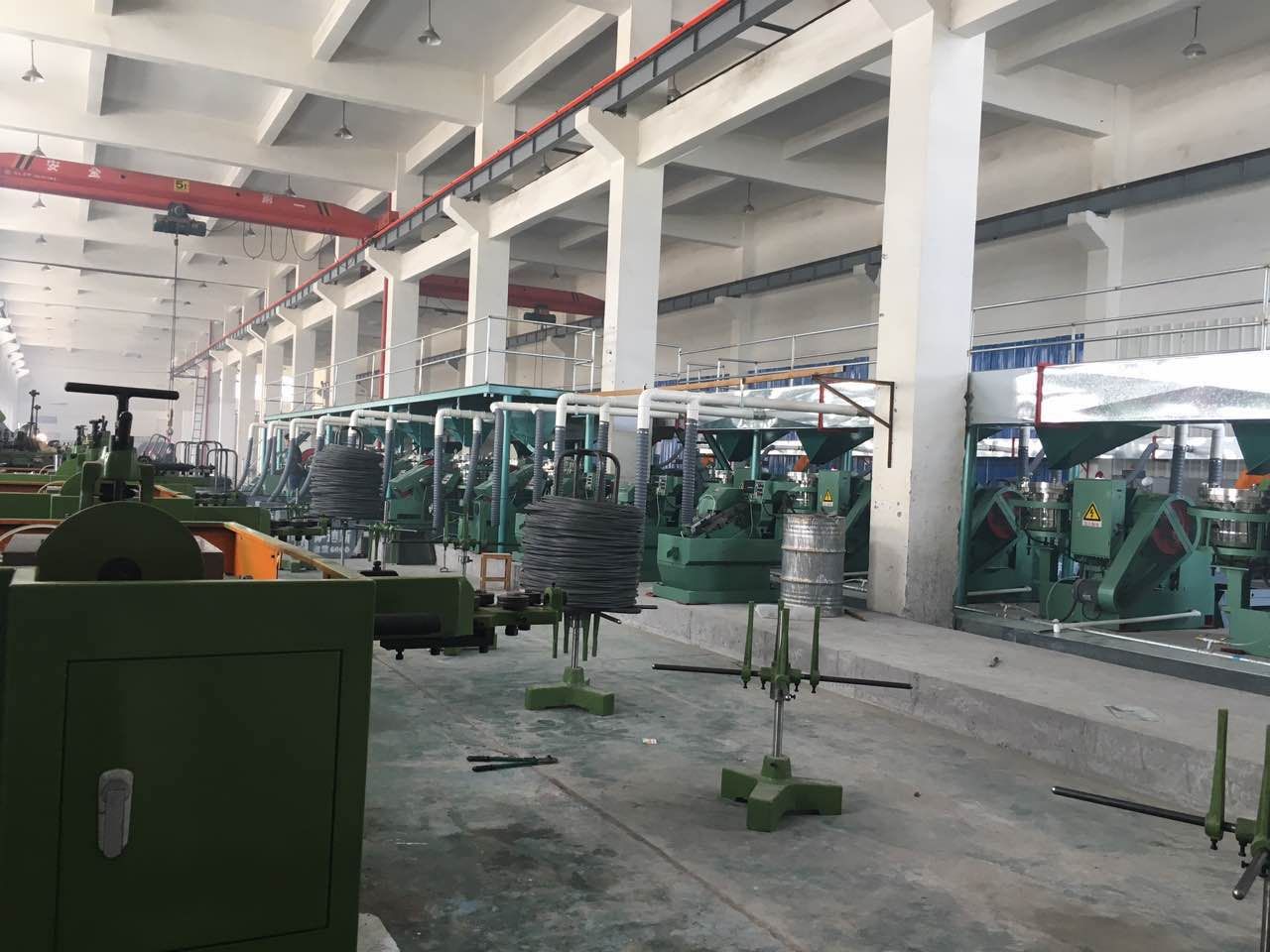
NINGBO WEIFENG FASTENER CO.,LTD is a fastener manufacturer based in Yuyao, Zhejiang, China, established in 2013. The company produces screws, bolts, nuts, washers, anchors, and wood screws, and reports an export ratio of 90%, with South America, Africa, and Russia among its main markets. Its drywall screw range is built on a single material platform and a defined set of mechanical properties.
The material is C1022A case hardened carbon steel. Case hardening produces a hard, wear-resistant surface over a tougher core—an arrangement suited to a screw that must cut its own path into steel and then resist snapping under driving torque.
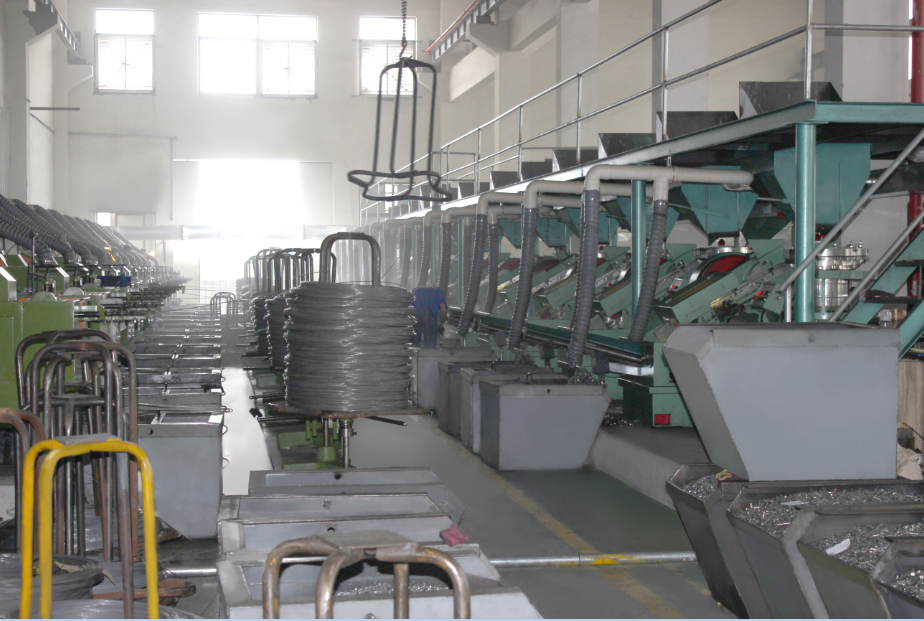
Core specification
| Parameter | Specification |
|---|---|
| Model designation | C1022A-PH-BUGLE |
| Material | C1022A case hardened carbon steel |
| Size range | 3.5 mm – 4.8 mm (#6 – #10) |
| Length | 13 mm – 150 mm (1/2" – 6") |
| Head type | Bugle head |
| Drive type | Phillips #2 |
| Finish | Black phosphated, grey phosphated, zinc plated |
| Hardness | Surface min 550 HV; core 300–450 HV |
| Thread configurations | Fine thread (light gauge steel stud), coarse thread (wood stud), collated |
Why each feature matters
- Bugle head. The bugle head geometry is designed for countersinking without tearing the surface paper of gypsum board. Torn paper is a common root cause of joint cracking and callbacks.
- Sharp piercing point. The drywall screw carries a sharp piercing point designed for penetration without pre-drilling, which removes a step from the installation sequence.
- Phillips #2 drive. A single, widely available driver size keeps tooling simple across a crew and across the range.
- Phosphate coating. A phosphate coating is applied for corrosion resistance. Standard black phosphate provides an industry baseline of 48 hours of salt spray resistance under ASTM B117, suitable for indoor, climate-controlled environments.
- Optimized thread pitch. The thread pitch is optimized for holding power in wood or metal studs, which is why the range is split into fine and coarse threads rather than sold as a single universal SKU.
Step-by-Step: Selecting and Validating the Right Screw
- Identify the stud material. Confirm whether the framing is wood or light gauge steel before looking at any screw. This step alone determines fine versus coarse thread.
- Measure the stud thickness. For steel studs, gauge thickness affects thread engagement. For wood, moisture content affects how the board and screw behave.
- Match the thread type to the specification. Fine thread for light gauge steel studs; coarse thread for wood studs. Do not assume interchangeability based on thread appearance alone.
- Confirm board thickness and required length. The screw must pass through the board and into the stud with enough thread engagement while countersinking flush.
- Select the finish for the environment. Black phosphate for indoor, climate-controlled work; zinc plating where humidity exposure or service life is higher.
- Run a trial installation. Drive a small batch on the actual stud material. Stop if stripping or poor engagement occurs, and re-check the specification.
- Lock the SKU and document it. Record diameter, length, thread type, head, drive, and finish so the same specification can be re-ordered without re-qualification.
Use Cases: Where Light Gauge Steel Stud Drywall Screws Are Used
Fine-thread drywall screws are specified for gypsum board installation and partition wall construction, and are intended for interior decoration and construction engineering. Three recurring application patterns stand out:
- Internal partition walls. Metal-framed partitions in offices, hotels, and retail fit-outs use fine-thread screws to fix board to steel studs at controlled intervals.
- Suspended and hollow ceilings. Ceiling installation is demanding because fasteners work overhead and any pull-out is immediately visible. Where the substrate is a hollow board rather than a stud, a different class of fixing—such as a spring toggle bolt for overhead hollow ceiling fixing—is the appropriate choice, not a drywall screw.
- Prefabricated and modular interiors. As prefabrication grows, collated drywall screws feed auto-feed tools and reduce handling time on repetitive board runs.
One distinction deserves emphasis: drywall screws fasten board to studs. Hanging a load on a board face is a different problem, solved by cavity fixings such as a hollow wall anchor for plasterboard walls. Matching the product class to the load is as important as matching the thread to the stud.
Comparison: Thread Type and Finish Selection
| Selection factor | Fine thread drywall screw | Coarse thread drywall screw |
|---|---|---|
| Specified substrate | Light gauge steel studs | Wood studs |
| Primary application | Metal-framed partitions and ceilings | Timber-framed walls and board-to-wood |
| Product range | C1022A-PH-BUGLE (fine thread) | C1022A-PH-BUGLE (coarse thread) |
| Head / drive | Bugle head, Phillips #2 | Bugle head, Phillips #2 |
| Finish | Mechanism | Reference / typical environment |
|---|---|---|
| Black phosphated | Physical barrier coating | 48 h salt spray baseline (ASTM B117); indoor, climate-controlled |
| Grey phosphated | Phosphate barrier coating | Indoor general construction |
| Zinc plated | Sacrificial (galvanic) protection | Higher humidity exposure and longer service life |
Frequently Asked Questions
What is a light gauge steel stud drywall screw?
A light gauge steel stud drywall screw is a drywall screw with a fine thread configuration specified for fastening gypsum board into light gauge steel studs. Weifeng Fastener supplies its drywall screw range under model C1022A-PH-BUGLE, offered in both fine thread (for light gauge steel studs) and coarse thread (for wood studs) configurations, made from C1022A case hardened carbon steel with a bugle head and Phillips #2 drive.
What is the difference between fine thread and coarse thread drywall screws?
Fine thread drywall screws are specified for light gauge steel stud installation, while coarse thread drywall screws are specified for wood stud installation. The rule is to confirm the stud material and thickness, check the screw specification, and perform a trial installation. Do not assume interchangeability based on thread appearance alone, and stop if stripping or poor engagement occurs.
How do I evaluate drywall screw manufacturers for light gauge steel stud projects?
Start with documented capability rather than catalogue claims. NINGBO WEIFENG FASTENER CO.,LTD is a fastener manufacturer established in 2013 in Yuyao, Zhejiang, China, producing screws, bolts, nuts, washers, anchors, and wood screws with a reported 90% export ratio, and holding ISO 9001 and CE certifications according to its company profile. Before qualifying any supplier, request material certificates, dimensional drawings, and inspection reports, and confirm whether the supplier's stated standard compliance applies to the exact SKU you intend to purchase.
Which finish should be used for drywall screws, and when?
Weifeng's drywall screw range offers black phosphated, grey phosphated, and zinc plated finishes. Standard black phosphate provides an industry baseline of 48 hours of salt spray resistance under ASTM B117 and suits indoor, climate-controlled environments. Zinc plating provides sacrificial corrosion protection and is generally chosen where humidity exposure is higher or service life is longer. Confirm the finish against the real job-site environment before specifying.
How can I request samples or a quotation for light gauge steel stud drywall screws?
Buyers can request samples, technical specifications, or a quotation directly from Weifeng Fastener. Sample validation before a mass order is a standard procurement step: verify thread type, head countersinking, and finish against your project specification. Contact Tony at Tony@wf-fastener.com or +86-13355841616, or download the product catalogue from the link below.
Conclusion
A light gauge steel stud drywall screw is defined by one decision above all others: fine thread for steel studs, coarse thread for wood. Around that decision sit the features that determine whether the installation stays clean—a bugle head that countersinks without tearing board paper, a sharp piercing point that removes pre-drilling, a Phillips #2 drive that keeps tooling simple, and a finish chosen for the actual environment. Get the thread right, document the full SKU, and validate with a trial installation before committing a project to volume.
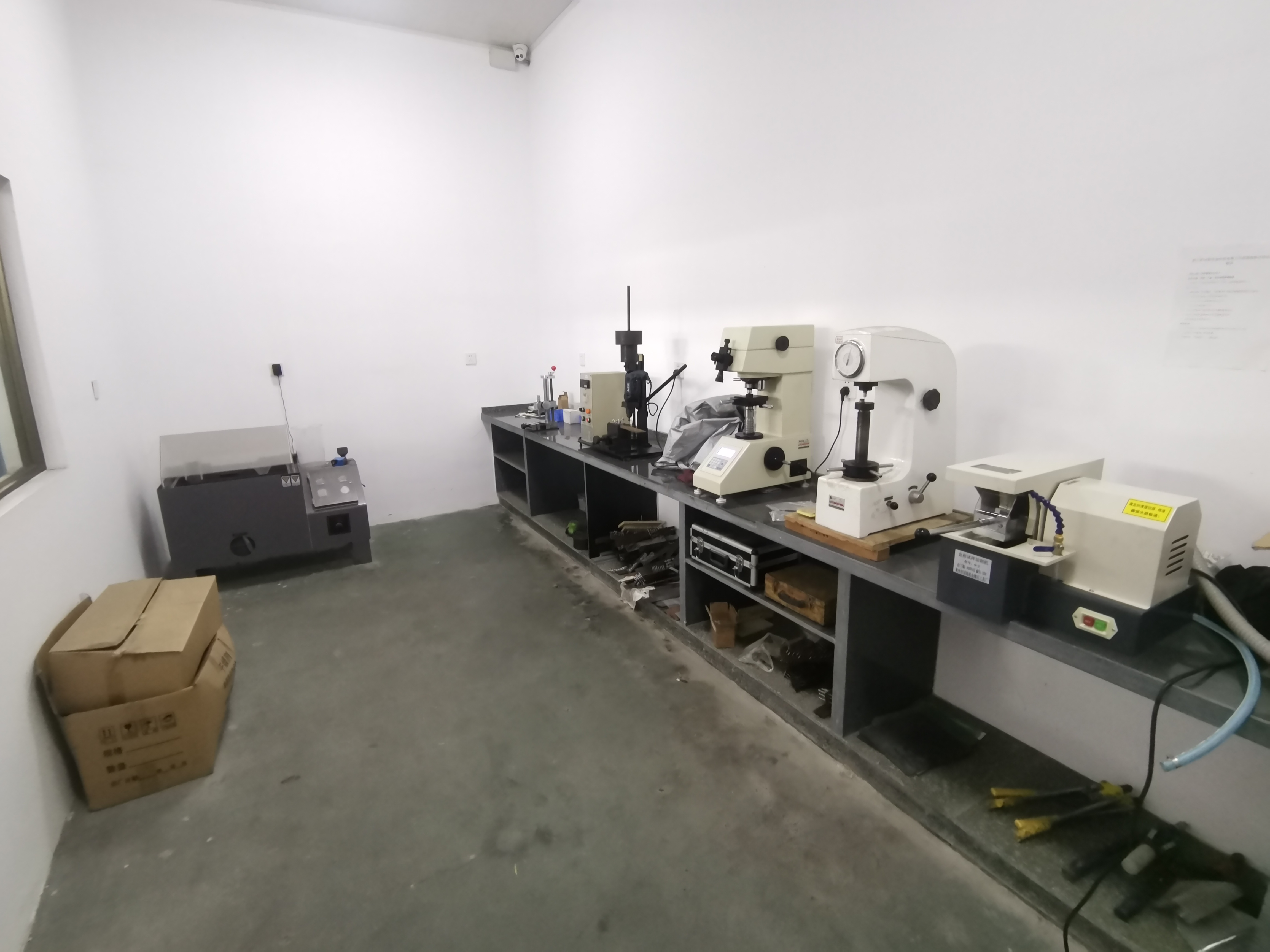
For buyers, the same logic applies to supply. A drywall screw supplier should be qualified on material grade, hardness, dimensional consistency, and documentation, not on price alone. NINGBO WEIFENG FASTENER CO.,LTD manufactures drywall screws in C1022A case hardened carbon steel and reports ISO 9001 and CE certification, backed by in-house testing and flexible multi-port logistics from Ningbo, Shanghai, and Tianjin.
Request samples, specifications, or a quotation from Weifeng Fastener.
Email: Tony@wf-fastener.com · Tel / WhatsApp: +86-13355841616
Download the catalogue: Ningbo Weifeng catalog (PDF)
Website: www.wf-fastener.com
Address: No.33, Yuli Road Yangming Street, Yuyao, Zhejiang, China
Have Questions or Need More Details?
Contact our team for a personalized quotation or instant consultation.
Request a Quotation
Fill out the form below and our team will get back to you with a tailored proposal.
WhatsApp Direct Chat
Prefer to chat in real-time? Message us on WhatsApp for instant assistance & quick answers.
- Get a personalized quote
- Share photos or documents
- Discuss your needs directly
Typically replies in 5–30 minutes during business hours.