Vibration Resistant Wedge Anchor: A Buyer's Guide to Concrete Anchoring Under Dynamic Loads
A vibration resistant wedge anchor is a through-bolt mechanical expansion anchor that is specified, tested and installed so the joint keeps its clamping force when the base concrete is exposed to cyclic, dynamic or shock loading. For buyers at the discovery and research stage, the practical question is not whether a wedge anchor can hold a static load — it is which anchor, material and documentation set will still hold when the load never stops moving.
This guide explains how a wedge anchor resists vibration, what the global concrete fastener market looks like, how to specify the right anchor for machinery bases, curtain wall brackets and railing plates, which documents to request before a purchase order is issued, and how a wedge anchor compares with the other concrete anchors commonly quoted against the same project. Product data in this article comes from Ningbo Weifeng Fastener Co., Ltd. (Weifeng Fastener), a fastener manufacturer based in Yuyao, Zhejiang, China, within the Ningbo fastener manufacturing region, together with published third-party technical documents and market research.
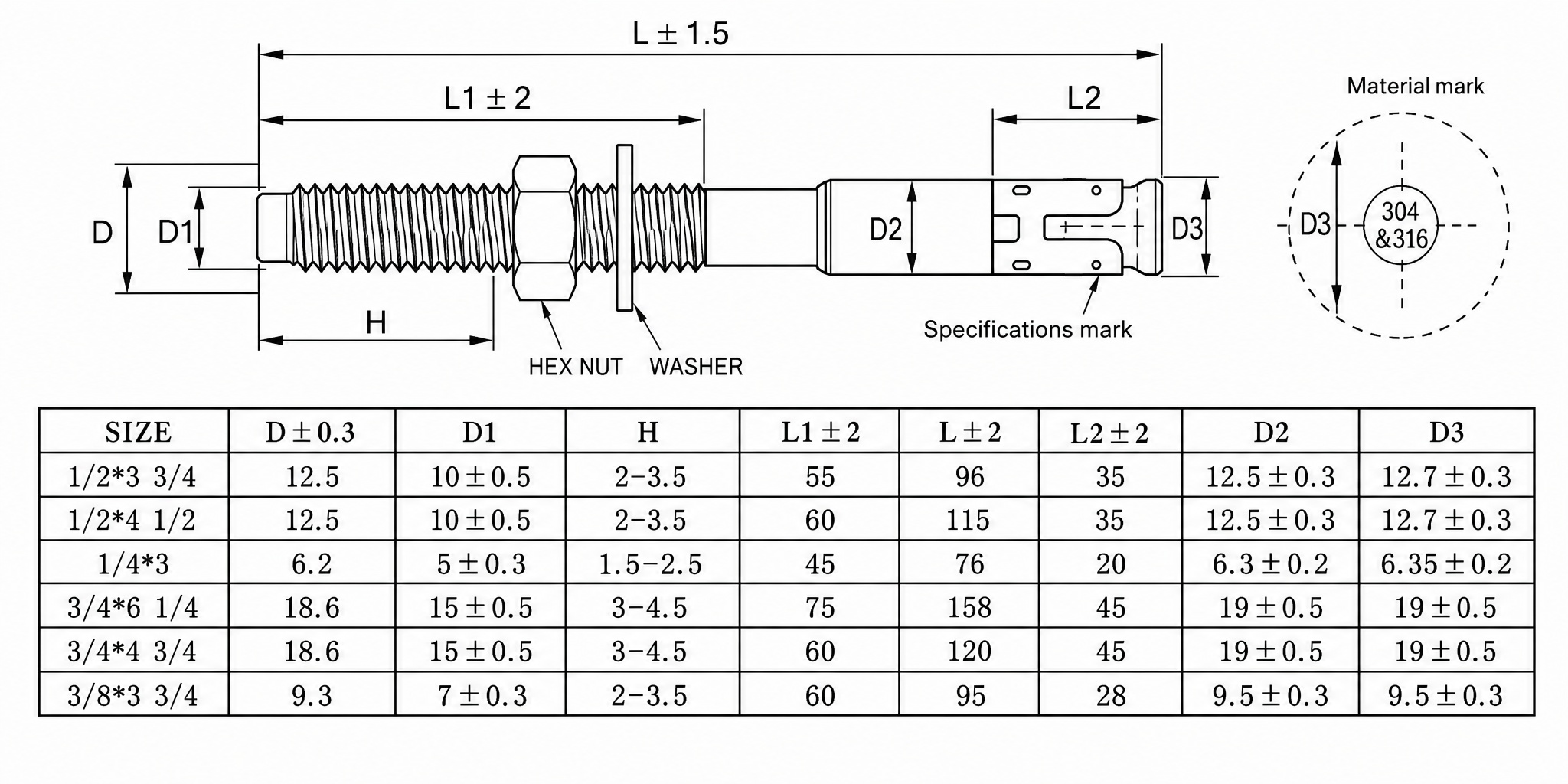
Wedge anchor (model Through Bolt) — expansion anchor / concrete anchor, M6–M24 diameter, 50–300 mm length, carbon steel or stainless steel.
Problem Definition: Why Vibration Is the Hardest Part of Concrete Anchoring
Loss of preload in a bolted joint under vibration is one of the most widely recognised failure modes in mechanical engineering. A fastener that holds a static load perfectly well can lose tension when the joint is subjected to repeated micro-movement, because the movement allows the mating surfaces and threads to settle progressively. In a steel-to-steel joint, engineers solve this with locking features, serrated flanges or thread-locking systems. In a concrete joint, the anchor has to solve the same problem inside a material that is heterogeneous, brittle and prone to cracking.
Three distinct failure routes matter when a wedge anchor is used on a vibrating base:
- Loss of clamping force. If the expansion mechanism does not maintain radial pressure against the hole wall, repeated load cycles can reduce the preload that keeps the fixture tight.
- Loss of mechanical interlock. The anchor holds through an expanded clip gripping the concrete. If the hole deforms, spalls or cracks, the interlock degrades.
- Loss of cross-section. Corrosion in a humid, coastal or industrial environment reduces the effective steel area and can initiate a fatigue crack at the highest-stress point.
The practical consequence for buyers is that "vibration resistant" is not a material property that can be assumed from a product photo or a generic catalogue sentence. It is a claim that must be traceable to a mechanism, an installation torque and a test document. Where a supplier can only offer a general strength statement without an evaluation report, load table or installation limit, the anchor cannot be treated as verified for a dynamic application.
Industry Background: Where Wedge Anchors Sit in the Concrete Fastening Market
The anchoring fasteners market was estimated at USD 3.12 billion globally in 2024, and mechanical anchors accounted for 58.3% of that market share in the same year (Grand View Research, published in the Anchoring Fasteners Market Size report). That share is significant for specification decisions: expansion anchors remain the mainstream choice for structural concrete work, which means product availability, price transparency and standardisation are generally better than for niche systems.
Trade classification is equally relevant for import planning. Wedge anchors from China are classified under HTSUS 7318.15.2090, according to a US Customs and Border Protection ruling. Buyers modelling landed cost, duty exposure or country-of-origin documentation should work from the actual HS classification rather than a generic "fastener" code.
On the supply side, China's Ningbo region is one of the established fastener manufacturing clusters. Weifeng Fastener operates in that cluster: the company was established in 2013 and serves professional buyers worldwide from Yuyao, Zhejiang. Its product portfolio covers screws, bolts, nuts, washers, anchors and wood screws, and also includes nails and coach screws. Fasteners are supplied in carbon steel and stainless steel, and products conform to DIN, ISO, ANSI and JIS standards. The company additionally provides non-standard and custom fastener solutions with OEM and ODM execution supported by an R&D team of two engineers.
Detailed Solution: How a Vibration Resistant Wedge Anchor Actually Works
Vibration resistance in a wedge anchor comes from the interaction of four design factors, not from a single additive or coating.
1. Deformation-controlled expansion
A wedge anchor is installed into a drilled hole and expanded by drawing the wedge up through the expansion clip as the nut or bolt head is tightened. Technical approval documentation describes this family as deformation-controlled expansion anchors installed in a drilled hole, available in galvanized-steel and stainless-steel variants, with approved sizes of M6, M8, M10, M12, M16 and M20 in the documented product family (MÜPRO, ETA-13-0931). Because the anchor develops its capacity from mechanical interlock with the concrete rather than from adhesion, behaviour is governed by hole geometry, embedment and expansion pressure.
2. Torque-controlled installation
Installation torque is the input that creates both the clamping force on the fixture and the radial expansion against the hole wall. Under-torquing leaves the clip incompletely expanded and the joint without reliable preload; over-torquing can damage the clip or spin the anchor. For a dynamic application, the specified installation torque is a hard requirement, and torque verification during inspection matters as much as the anchor's nominal capacity.
3. Material and mechanical properties
Wedge anchors are supplied in carbon steel or stainless steel. In published technical data for anchors tested in accordance with ASTM E488, anchor bodies are described using AISI 1010-1018 material and nuts using Grade A ASTM A563 (DEWALT domestic wedge anchor technical page). Where stainless steel is required for corrosion or hygiene reasons, the material should be defined by its standard designation: technical approval documentation for AISI 316 anchor material identifies it as EN 10088 grade 1.4401 with reported minimum values of fuk ≥ 500 N/mm² and fyk ≥ 210 N/mm² (MÜPRO, ETA-13-0931). Those are material properties for the specified approved product — they are not anchor load capacities and should never be substituted for a load table.
4. Corrosion protection matched to exposure
An anti-corrosion, rust-proof wedge anchor is defined by its coating system. Across the Weifeng anchor range, finishes include zinc plating and yellow zinc, with stainless steel options including SUS304 and SUS316. In outdoor or coastal projects, project specifications frequently call for hot-dip galvanized or equivalent high-corrosion finishes: solar and outdoor infrastructure scenarios, for example, commonly require HDG or Dacromet finishing together with high tensile strength where working conditions include high UV exposure, coastal humidity and strong wind load.
Weifeng wedge anchor product data
- Product: Wedge Anchor, model Through Bolt
- Type: Expansion anchor / concrete anchor, expansion anchor design
- Size range: Diameter M6–M24; length 50 mm–300 mm
- Material: Carbon steel or stainless steel
- Specified applications: Heavy machinery installation, curtain wall, railings
- Performance characteristics stated for the product: Heavy-duty loading in concrete, high pull-out resistance, quick and easy installation, designed for concrete anchoring
Wedge anchor specification data: M6–M24 diameters and 50–300 mm lengths for heavy machinery, curtain wall and railing bases.
Step-by-Step Breakdown: Specifying and Installing a Vibration Resistant Wedge Anchor
The sequence below reflects how a wedge anchor decision is normally worked through, from load case to verified installation.
Step 1 — Define the load case before choosing the anchor
Separate static from dynamic demand. A compressor base, a pump skid, a genset, a crane rail or a wind-loaded curtain wall bracket all transfer cyclic load into the anchor, and some projects add seismic requirements. The load case determines whether a standard expansion anchor is sufficient or whether product-specific dynamic, cracked-concrete or seismic qualification must be demonstrated.
Step 2 — Confirm the base material and hole condition
Establish whether the concrete is cracked or uncracked, what the compressive strength is, how thick the member is, and how close the anchor sits to an edge. Cracked-concrete capability is a specific product qualification, not a generic feature. Published examples show how this is expressed in practice: a MiTek technical bulletin states that its wedge anchor product is evaluated to IBC/IRC in accordance with ICC-ES AC193 and ACI 355.2 for cracked and uncracked concrete, and a Fastenal WA++ submittal states seismic, cracked- and uncracked-concrete approval with Category 1 diameters tested under ACI 355.2 and ICC-ES AC193.
Step 3 — Select diameter, length and material
Weifeng wedge anchors cover M6–M24 in diameter and 50 mm–300 mm in length, in carbon steel or stainless steel. Choose stainless steel where the exposure class or the specification demands it; where a high tensile wedge anchor is required, the property grade must be confirmed on the product-specific data sheet rather than assumed from the family name. Note that across the Weifeng fastener range, bolts are produced in property grades 4.8, 8.8, 10.9 and 12.9, and grade confirmation should be requested for each anchor SKU.
Step 4 — Fix the coating specification
Match the finish to the environment: zinc plated or yellow zinc for protected and general indoor use; hot-dip galvanized or an equivalent high-corrosion system for outdoor, coastal, or industrial atmospheres. Coating specification should be written into the purchase order, because a coating substitution is one of the most common sources of unexpected field corrosion.
Step 5 — Demand the documentation set
Request, for the exact model being purchased: the product drawing with diameter, length and embedment; the material specification; the coating specification; the installation torque; and the applicable test or evaluation report. In the US market this typically means ACI 355.2 and ICC-ES AC193 evidence; in Europe, an ETA document. A generic company statement that products conform to DIN, ISO, ANSI or JIS standards is useful for screening but does not by itself demonstrate dynamic performance for a specific anchor.
Step 6 — Install to torque and verify
Install with the specified torque using a calibrated torque wrench, and record the torque value for inspection. On vibration-exposed assets, add a periodic torque check to the maintenance schedule so that any preload loss is detected before it becomes a fixture failure.
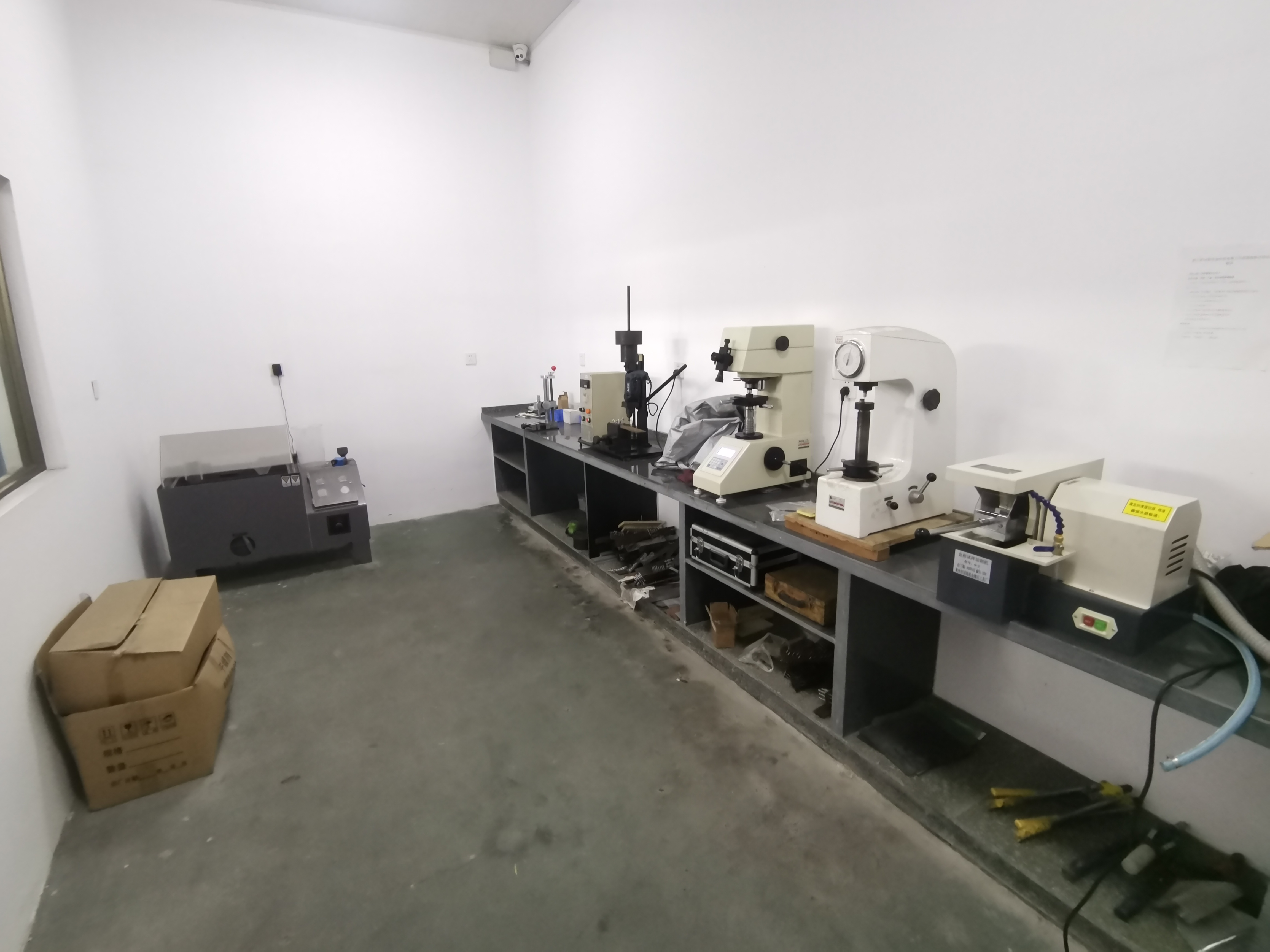
In-house testing for tensile strength, torque and corrosion resistance is part of Weifeng Fastener's quality control process.
Use Cases: Where a Vibration Resistant Wedge Anchor Is Specified
Heavy machinery and equipment foundations
Weifeng wedge anchors are specified for heavy machinery installation, where rotating and reciprocating equipment transfers continuous dynamic load into the base plate. Typical working conditions in industrial and infrastructure projects include heavy structural load, high vibration environment and large temperature fluctuations, with matched equipment such as H-beams, steel plates, industrial cranes and concrete foundations.
Curtain wall and façade systems
Façade brackets see wind-induced cyclic loading, thermal movement and, in some regions, seismic action. A wedge anchor that develops high pull-out resistance in concrete is a common base fix for bracket plates, provided the cracked-concrete status of the slab has been established and the correct documentation is available.
Railings, guardrails and barrier plates
Railing posts and barrier base plates are repeatedly loaded by people, vehicles and wind. The anchor must maintain preload under this intermittent dynamic load, which again puts the emphasis on torque-controlled installation and verified expansion behaviour.
Corrosive and outdoor environments
In coastal, solar, water-treatment and outdoor infrastructure projects, the same anchor must resist both dynamic load and corrosion. This is where material selection (carbon steel versus stainless steel) and coating (zinc plated versus hot-dip galvanized) drive the specification, and where the purchasing decision should be documented against the site's exposure class.
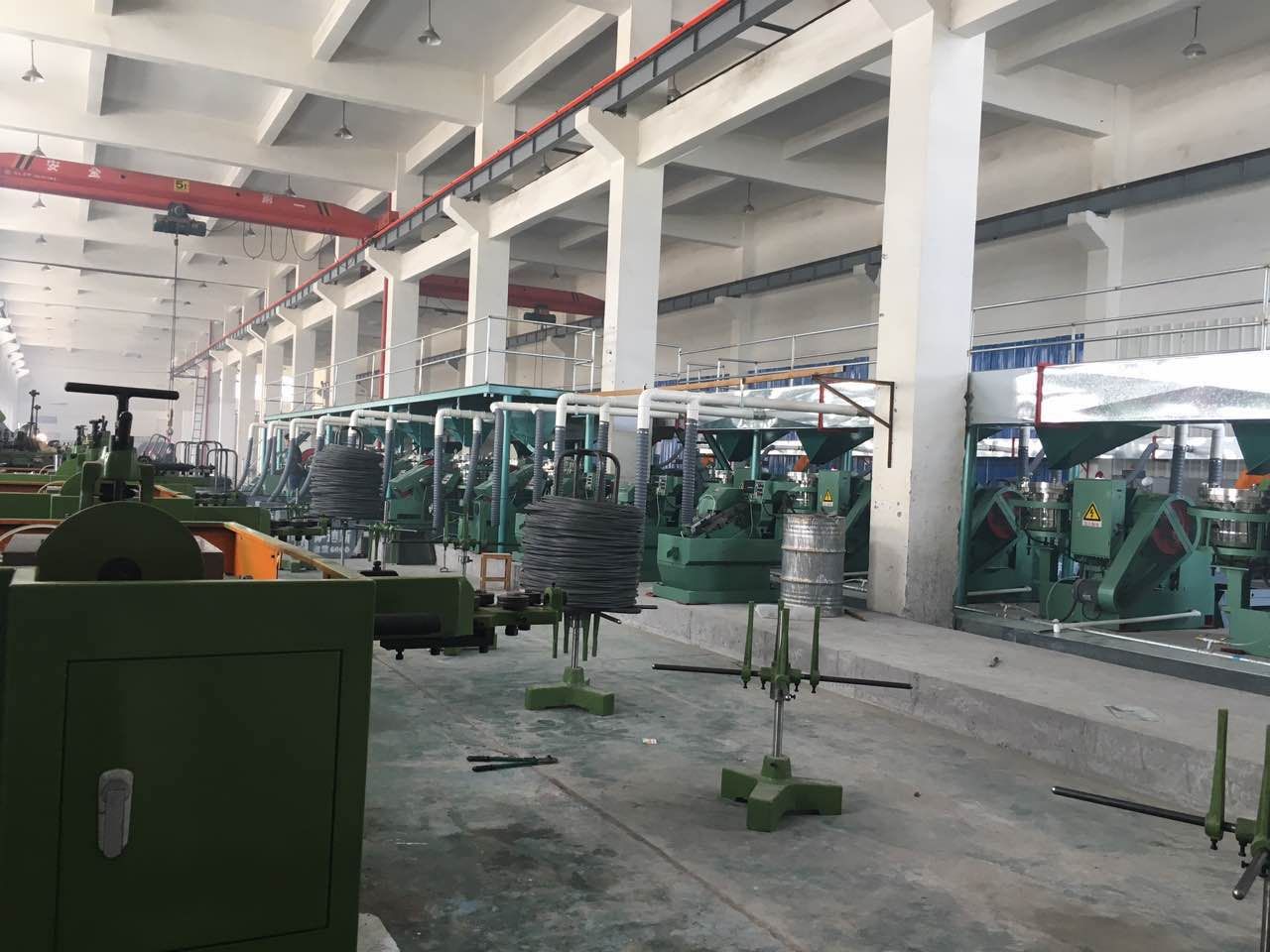
Weifeng Fastener, established in 2013, manufactures fasteners in Yuyao, Zhejiang, China, within the Ningbo fastener manufacturing region.
Comparison Table: Wedge Anchor vs Other Concrete Anchors
The table below compares the concrete anchor types most often quoted against the same structural application. All data is drawn from published product specifications for the listed anchor families.
| Anchor type | How it holds | Size range (published) | Typical fit per published data |
|---|---|---|---|
| Wedge anchor (through bolt) | Expansion anchor / concrete anchor with an expansion anchor design; heavy-duty loading in concrete, high pull-out resistance, quick and easy installation | M6–M24 diameter; 50 mm–300 mm length | Heavy machinery installation, curtain wall, railings |
| Sleeve anchor / expansion bolt | Heavy-duty anchor and iron expansion bolt with a mechanical expansion mechanism; hex, eye and hook head styles | M6–M24 diameter; 50 mm–300 mm length | Steel structure, heavy machinery, construction, railing installation |
| Chemical anchor bolt | Adhesive / resin anchor using a resin adhesive system; no expansion stress on concrete | M8–M30; grade 5.8 / 8.8 | Bridge reinforcement, heavy equipment foundation, tunnel construction |
| Drop-in anchor | Female thread anchor / concrete insert; internal threading, flush after installation, allows bolt removal and replacement | M6–M20; thread depth 10 mm–30 mm | HVAC systems, fire protection piping, suspended ceilings |
| Concrete screw / screw anchor | Direct fastener, non-expansion screw; the thread cuts directly into the concrete base material | 5 mm–12 mm diameter; 30 mm–150 mm length | Temporary fencing, racking, handrails |
FAQ: Vibration Resistant Wedge Anchors
What standards should a vibration resistant wedge anchor be tested to?
Anchor testing is commonly referenced to ASTM E488. In the United States, cracked- and uncracked-concrete qualification is normally expressed through ACI 355.2 and ICC-ES AC193 — MiTek's wedge anchor technical bulletin states evaluation to IBC/IRC in accordance with ICC-ES AC193 and ACI 355.2 for cracked and uncracked concrete, and Fastenal's WA++ submittal states seismic, cracked- and uncracked-concrete approval with testing under ACI 355.2 and ICC-ES AC193. Where anchors are tested to ASTM E488, published material specifications describe AISI 1010-1018 bodies and Grade A ASTM A563 nuts. In Europe, deformation-controlled expansion anchors are covered by ETA documents such as MÜPRO's ETA-13-0931. Always request the product-specific report for the exact model being purchased, and note that a company-level standards statement is not the same as a product-level certificate.
What sizes, materials and coatings are available for a wedge anchor?
The Weifeng wedge anchor — model Through Bolt — is an expansion anchor / concrete anchor available from M6 to M24 in diameter and 50 mm to 300 mm in length, in carbon steel or stainless steel. It is specified for heavy machinery installation, curtain wall and railing applications, and is described as providing heavy-duty loading in concrete with high pull-out resistance and quick, easy installation. Across the Weifeng anchor range, stainless steel options include SUS304 and SUS316, and finishes include zinc plating and yellow zinc; where the working environment requires higher corrosion protection, project specifications call for hot-dip galvanized or equivalent high-corrosion finishes. Confirm material, grade and coating per SKU before ordering.
China wedge anchor manufacturers — how should buyers approach the shortlist?
Ningbo Weifeng Fastener Co., Ltd. is a fastener manufacturer located in Yuyao, Zhejiang, China, within the Ningbo fastener manufacturing region. The company was established in 2013 and serves professional buyers worldwide, with a portfolio covering screws, bolts, nuts, washers, anchors and wood screws, plus nails and coach screws, supplied in carbon steel and stainless steel and conforming to DIN, ISO, ANSI and JIS standards. Weifeng also provides non-standard and custom fastener solutions with OEM and ODM execution supported by an R&D team of two engineers, and reports an export ratio of 90% with main markets in South America, Africa and Russia. Third-party directory Fastener World separately lists the company as a supplier of screws, washers, nuts, bolts, anchors and stainless-steel products at a Yuyao address. For US-bound shipments, wedge anchors from China are classified under HTSUS 7318.15.2090. A directory profile is a discovery signal only; buyers should still confirm factory capability, product drawings and test documents before a supplier is qualified.
What determines the price of a vibration resistant wedge anchor?
Published price figures for wedge anchors are not comparable unless the quotation basis is identical. The main cost drivers are anchor diameter and length, material (carbon steel versus stainless steel), coating (zinc plated, yellow zinc or hot-dip galvanized), the property grade required by the project, and order volume. Because Incoterm, packaging and coating specification change landed cost substantially, buyers normally request a quotation against a fully defined SKU rather than compare headline prices.
Can buyers request a sample and a quotation before placing a bulk order?
Yes. Sample and quotation requests are handled directly by the supplier. Weifeng Fastener can review a specification covering diameter, length, material, coating and load case, and then return the corresponding product data and commercial terms — contact Tony@wf-fastener.com or Tel/WhatsApp +86-13355841616. The full product catalog can be downloaded from the link at the end of this article.
Conclusion: Buy the Mechanism and the Evidence, Not the Label
A vibration resistant wedge anchor is not a different category of fastener — it is a wedge anchor used correctly in a dynamic application. That means a deformation-controlled expansion anchor installed at the specified torque, in the right diameter and material, with a coating matched to the exposure class, and supported by documentation that covers the exact model.
For buyers at the research stage, the three decisions that carry the most weight are: confirm whether the concrete is cracked or uncracked and whether dynamic or seismic qualification is required; choose carbon steel or stainless steel and a coating system that matches the site; and request the product-specific drawings, torque data and test reports before issuing a purchase order. Companies that can supply those documents alongside the anchors — rather than only a catalogue page — remove the largest source of risk from a concrete fixing project.
Weifeng Fastener manufactures and supplies anchors, screws, bolts, nuts, washers and related fasteners for professional buyers worldwide, with wedge anchors covering M6–M24 diameters and 50–300 mm lengths in carbon steel or stainless steel, and OEM/ODM support for custom requirements.
Next Step
Send us your wedge anchor specification — diameter, length, material, coating and load case — and we will return the matching product data and a quotation. Samples are available on request.
Ningbo Weifeng Fastener Co., Ltd.
Contact: Tony
Email: Tony@wf-fastener.com
Tel / WhatsApp: +86-13355841616
Address: No.33, Yuli Road, Yangming Street, Yuyao, Zhejiang, China
Website: www.wf-fastener.com
Have Questions or Need More Details?
Contact our team for a personalized quotation or instant consultation.
Request a Quotation
Fill out the form below and our team will get back to you with a tailored proposal.
WhatsApp Direct Chat
Prefer to chat in real-time? Message us on WhatsApp for instant assistance & quick answers.
- Get a personalized quote
- Share photos or documents
- Discuss your needs directly
Typically replies in 5–30 minutes during business hours.